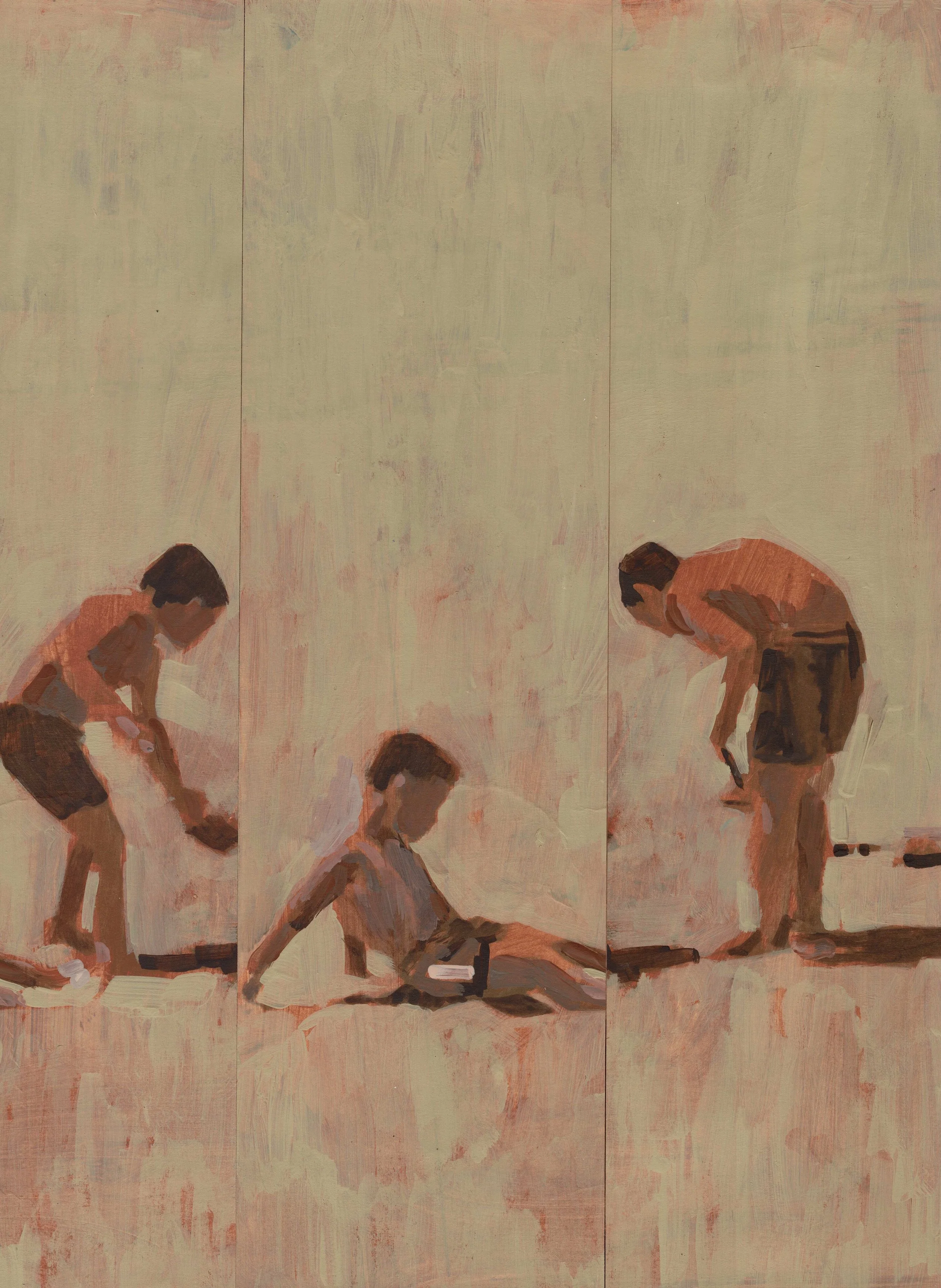
Beach Play I — 2026 Collage, acrylics on faded photo, artist frame 40 x 30 cm
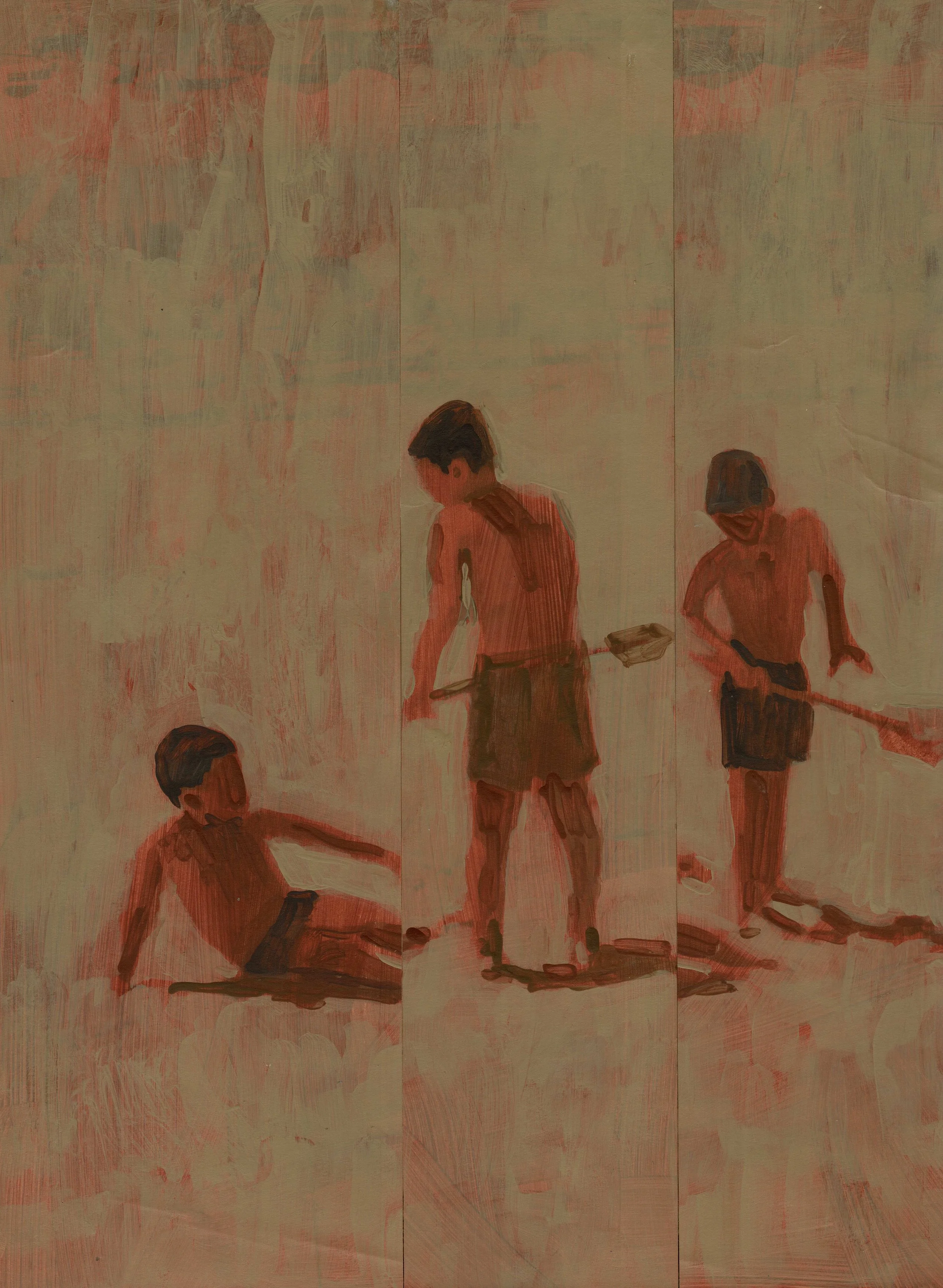
Beach Play II — 2026 Collage, acrylics on faded photo, artist frame 40 x 30 cm
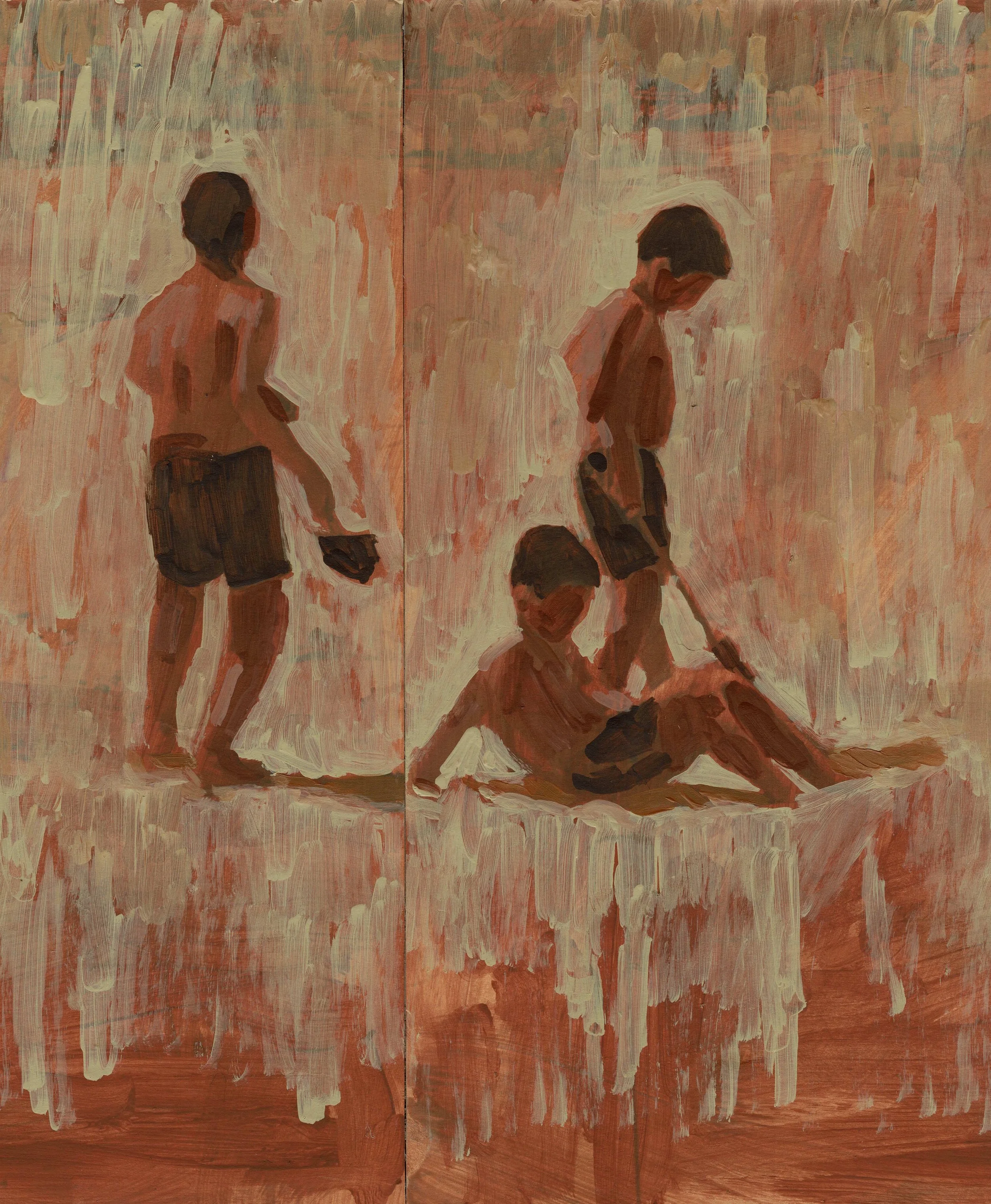
Beach Play III — 2026 Collage, acrylics on faded photo, artist frame 30 x 25 cm
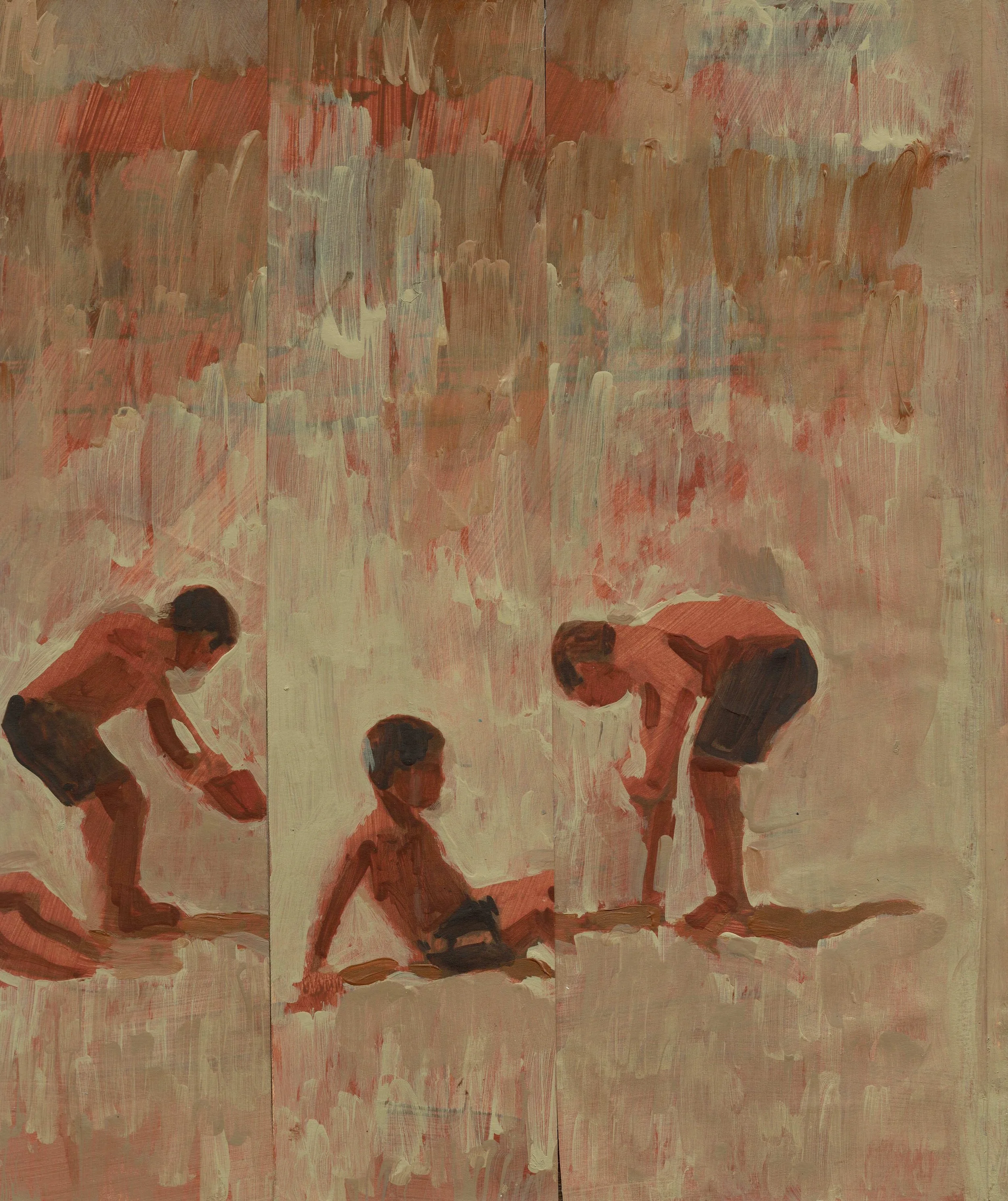
Beach Play IV — 2026 Collage, acrylics on faded photo, artist frame 30 x 25 cm
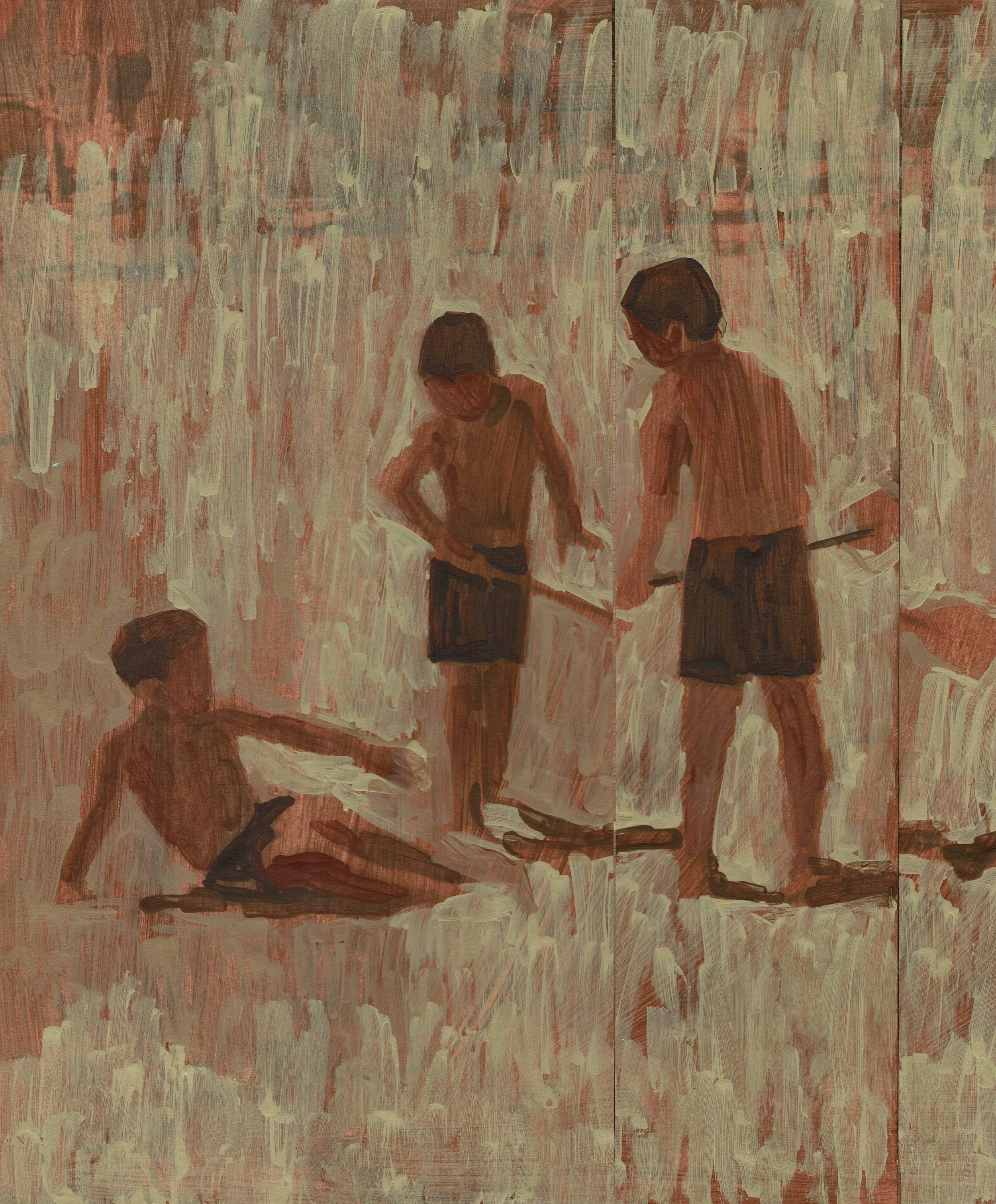
Beach Play V — 2026 Collage, acrylics on faded photo, artist frame 30 x 25 cm
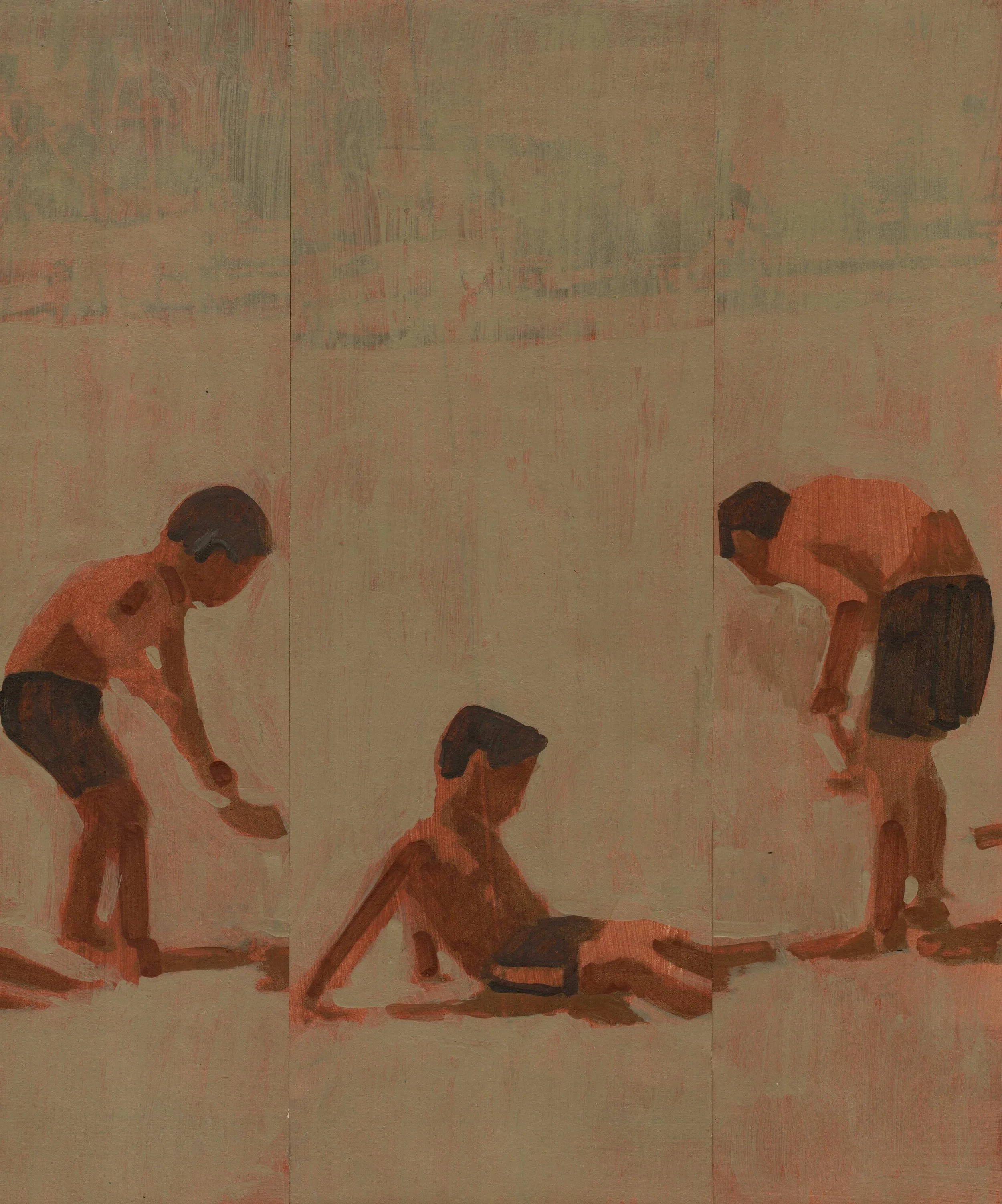
Beach Play VI — 2026 Collage, acrylics on faded photo, artist frame 30 x 25 cm
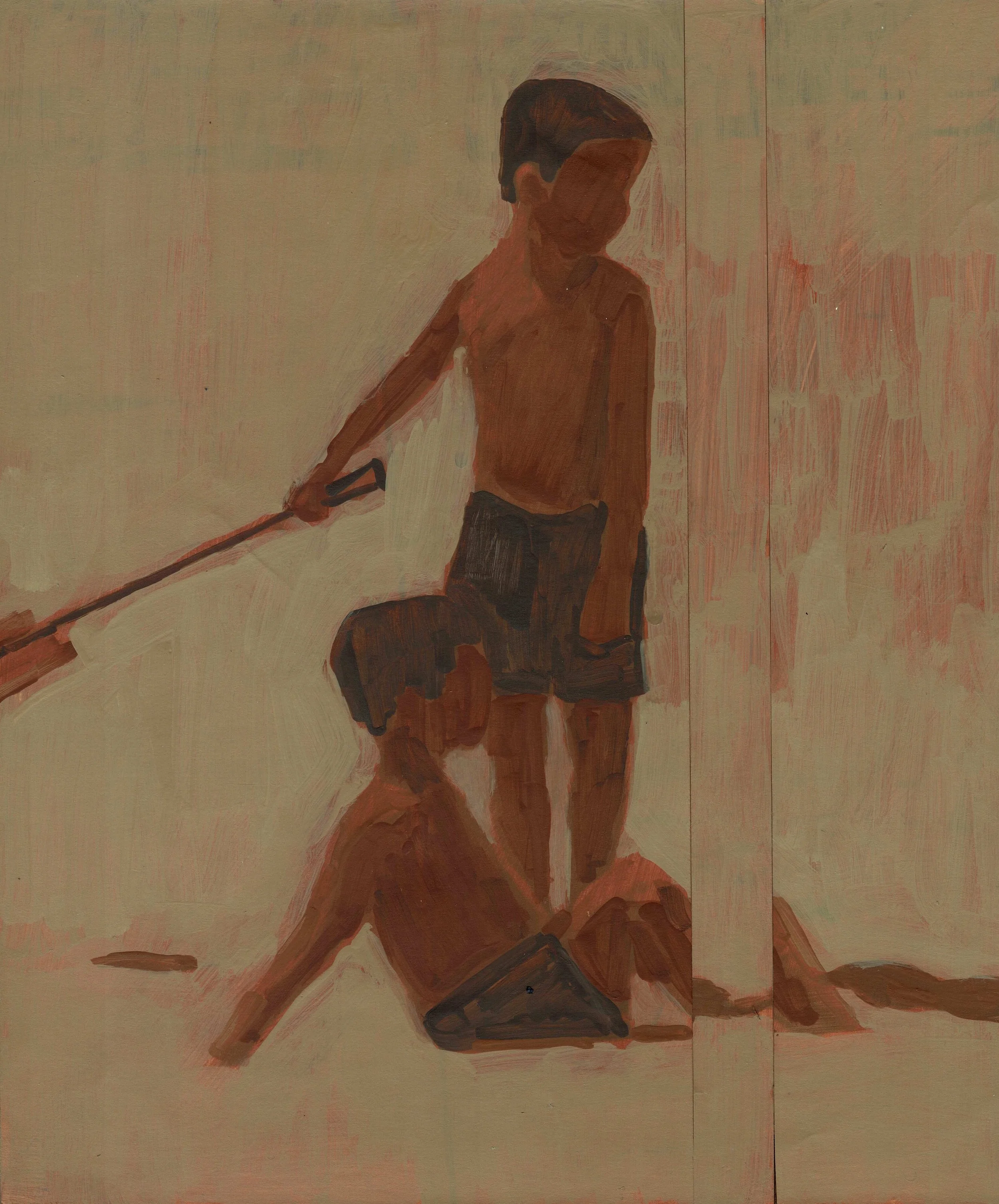
Beach Play VII — 2026 Collage, acrylics on faded photo, artist frame 30 x 25 cm
The scene did not ask to be painted more than once. It insisted.
Three boys on a beach, one to be buried by the others, the way children have always done this, on every beach, in every era. It registered at once, not as observation but as memory, as something once embodied. The playing human: the Homo Ludens.
Beach Play began as a fragment inside a wider view of a beach in Crete. A moment of stillness: sitting, watching, not looking for anything. The three figures pulled focus. The decision was made to isolate them entirely, to paint away the surroundings until only that scene remained. Some residue persists: the edge of a beach chair, the shadow of an umbrella. The beach is gone but it leaves traces, the way a memory does when you try to hold only part of it.
Many versions were made from that single scene. The selection was eventually narrowed to seven. There is a discipline in that restriction. Not every version was equally necessary, and the act of deciding which ones to keep is part of the work itself.
Each painting was then sliced into vertical strips and reassembled in a shifted sequence. The figures remain recognisable, but something in the image has moved. A glitch in the record, the moment slightly out of register with itself. Which is perhaps how it felt to watch: familiar and distant at once, belonging to now and to a long time ago simultaneously.
Beach Play was acquired in its entirety by a Belgian collector. The seven works remain together, as they were conceived.
View other series → Provence → Ausfahrt → Bilbao → Greetings from …