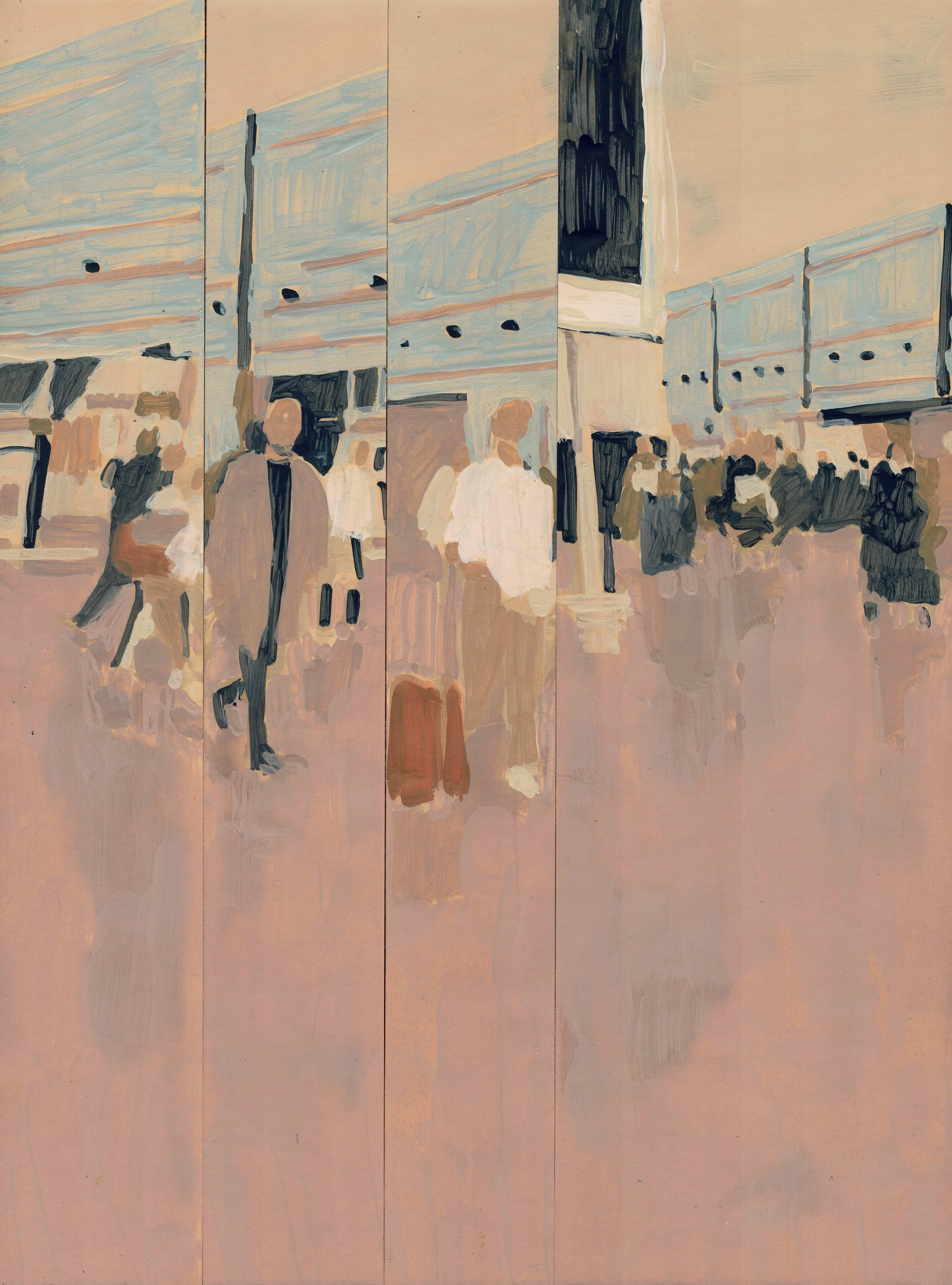
Transit Traces — 2026 Collage, acrylics on faded photo, artist frame 40 x 30 cm

Sunny Soñar — 2026 Collage, acrylics on faded photo, artist frame 30 x 25 cm
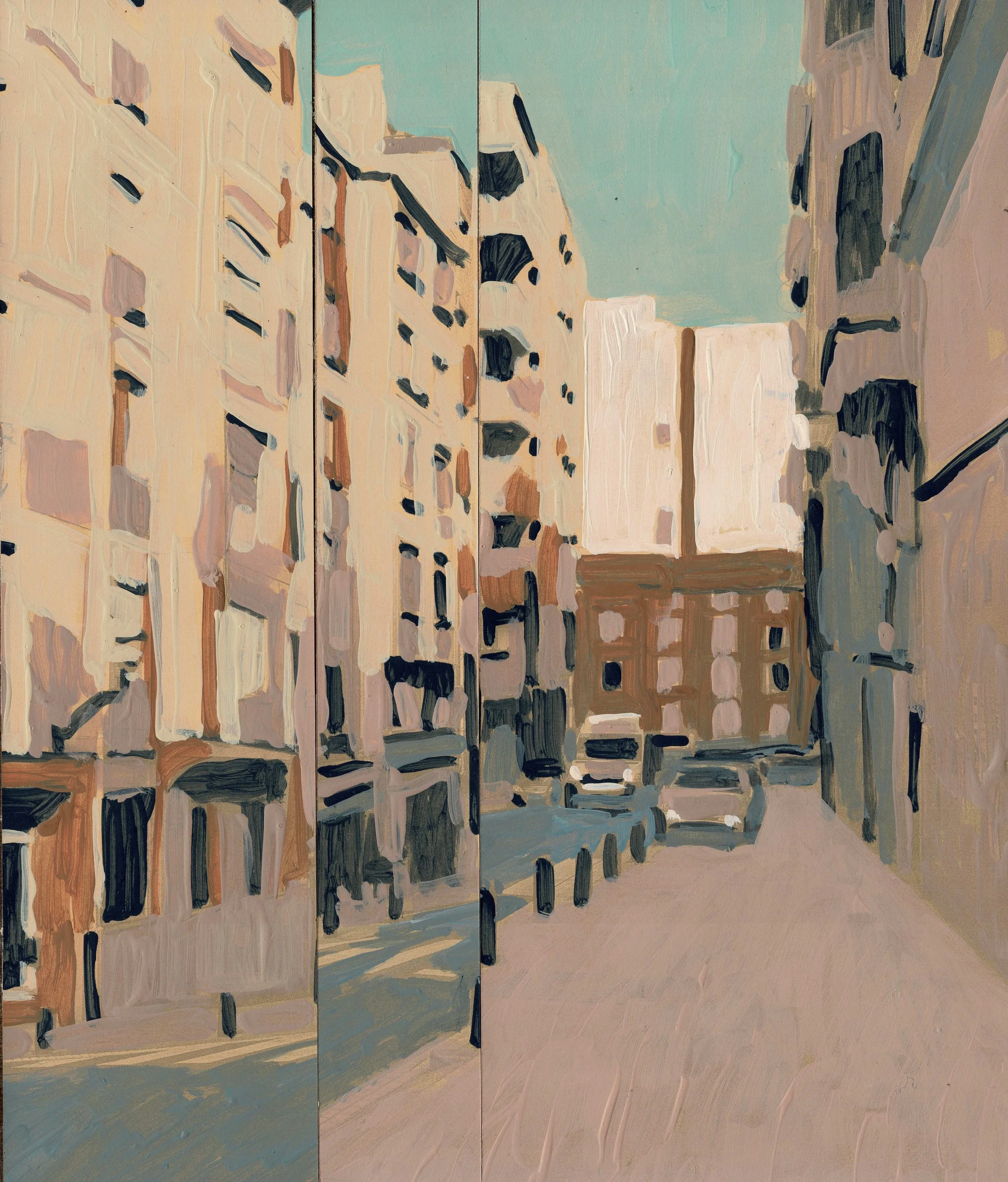
Walks Within I — 2026 Collage, acrylics on faded photo, artist frame 30 x 25 cm
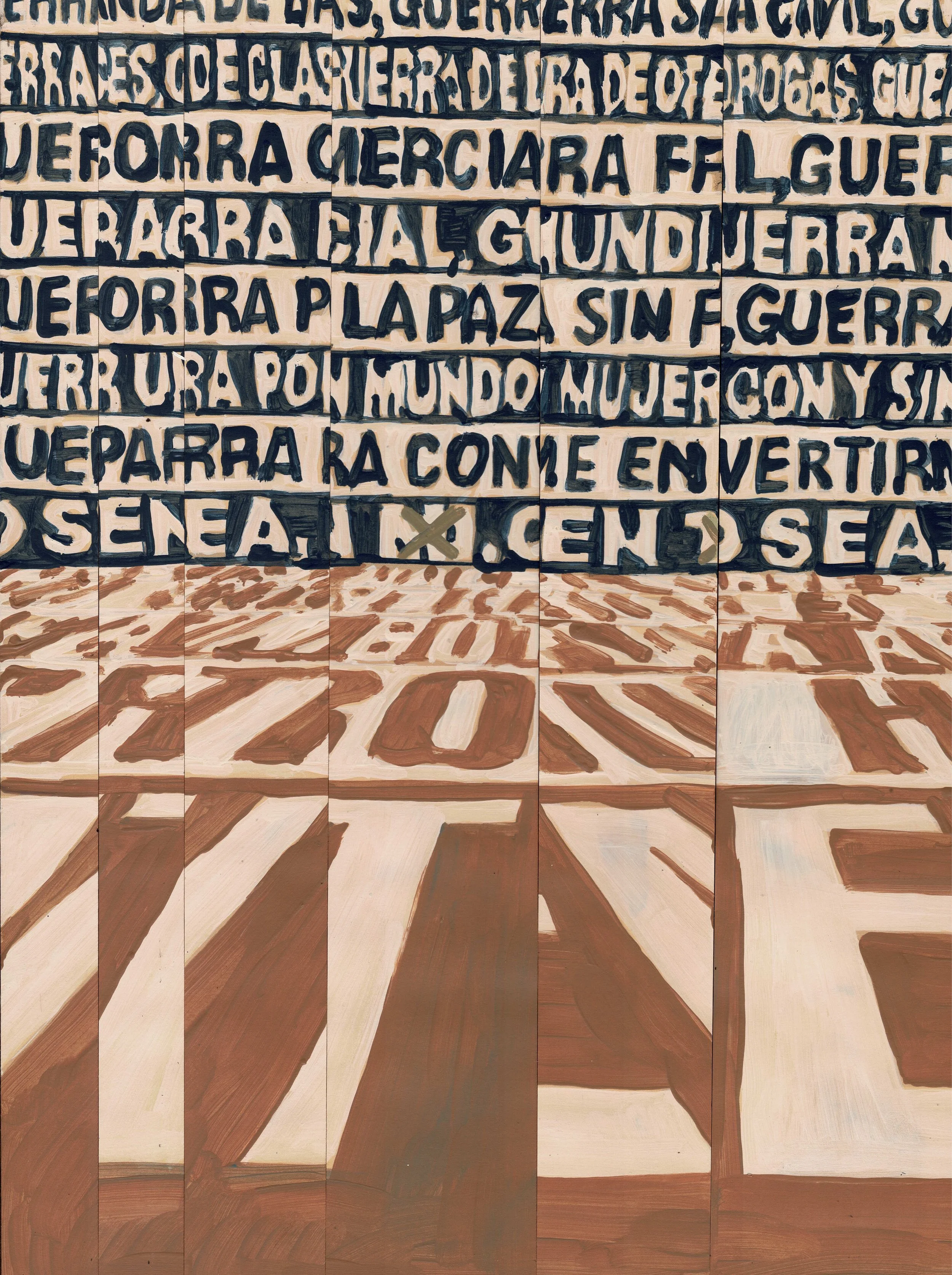
Barbara's Bite I — 2026 Collage, acrylics on faded photo, artist frame 40 x 30 cm
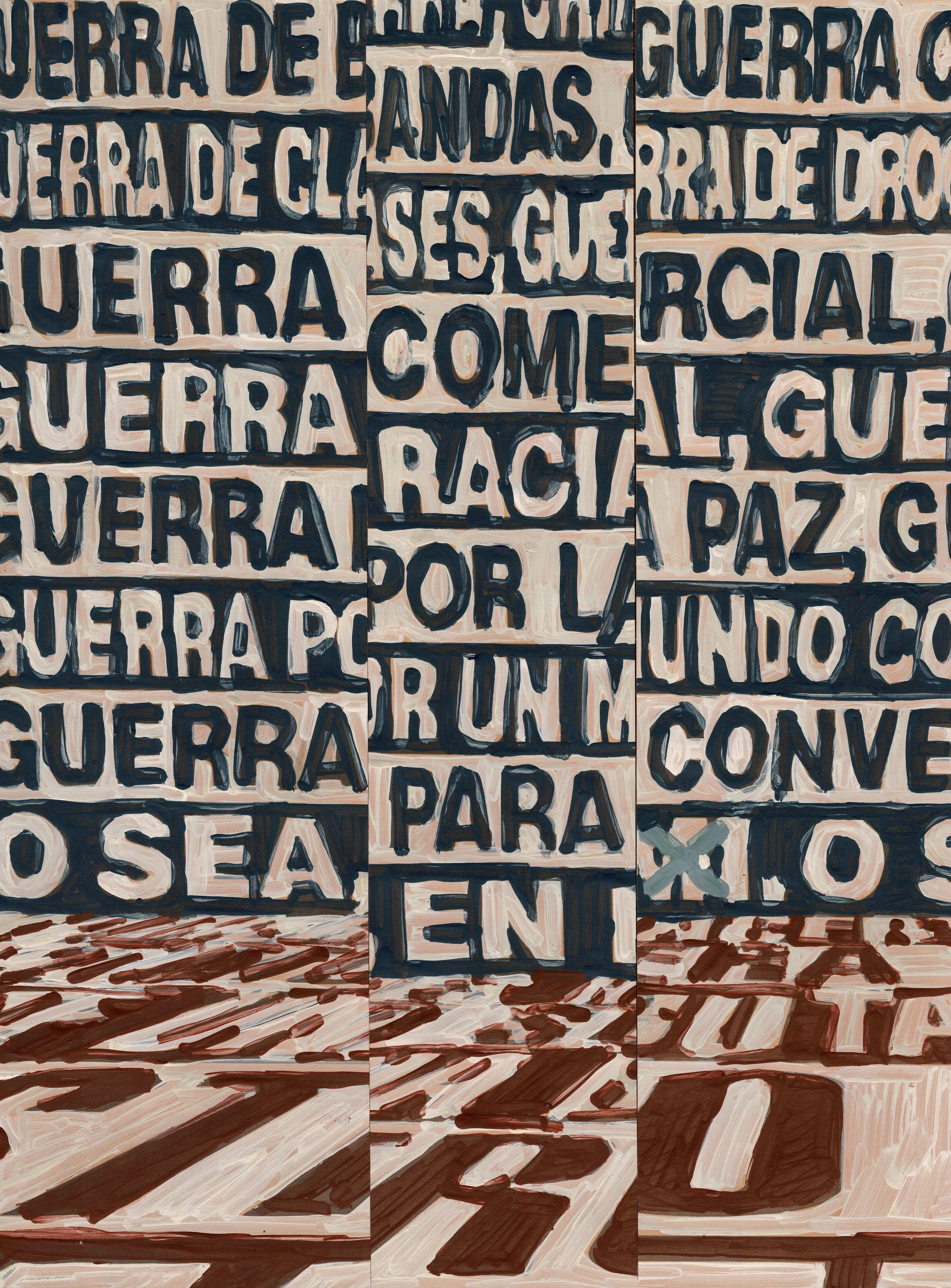
Barbara's Bite II — 2026 Collage, acrylics on faded photo, artist frame 40 x 30 cm
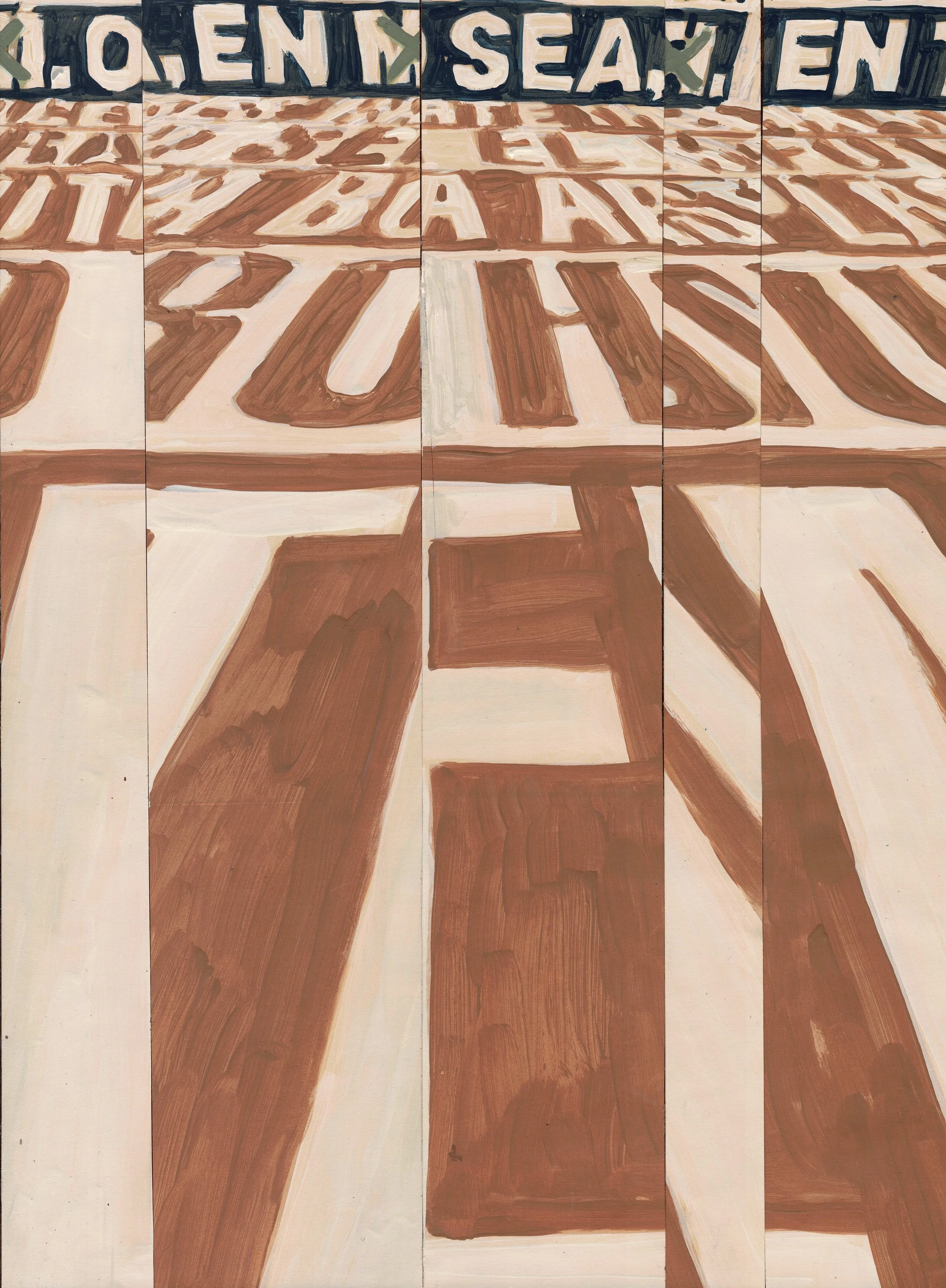
Barbara's Bite III — 2026 Collage, acrylics on faded photo, artist frame 40 x 30 cm
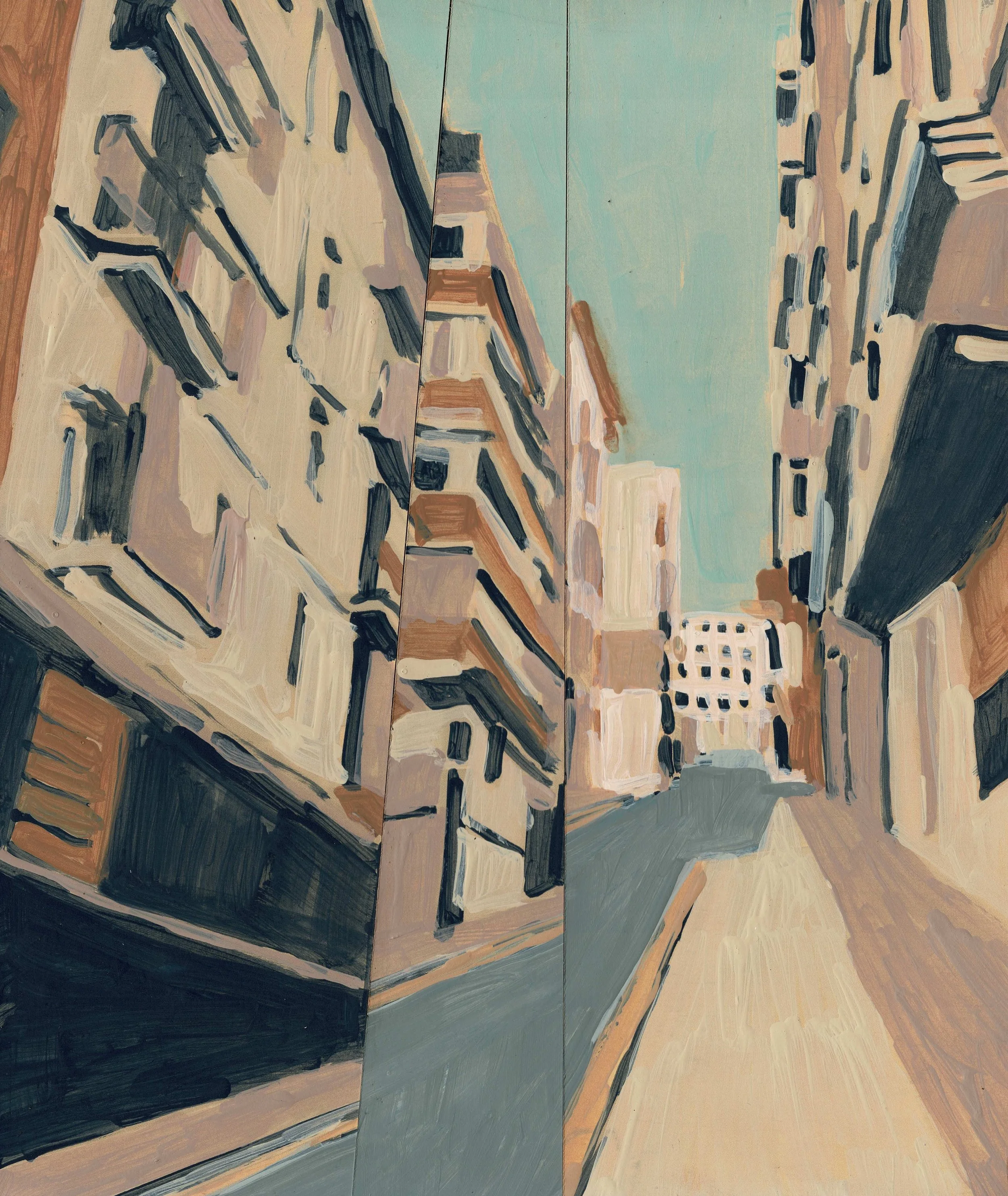
Walks Within II — 2026 Collage, acrylics on faded photo, artist frame 30 x 25 cm
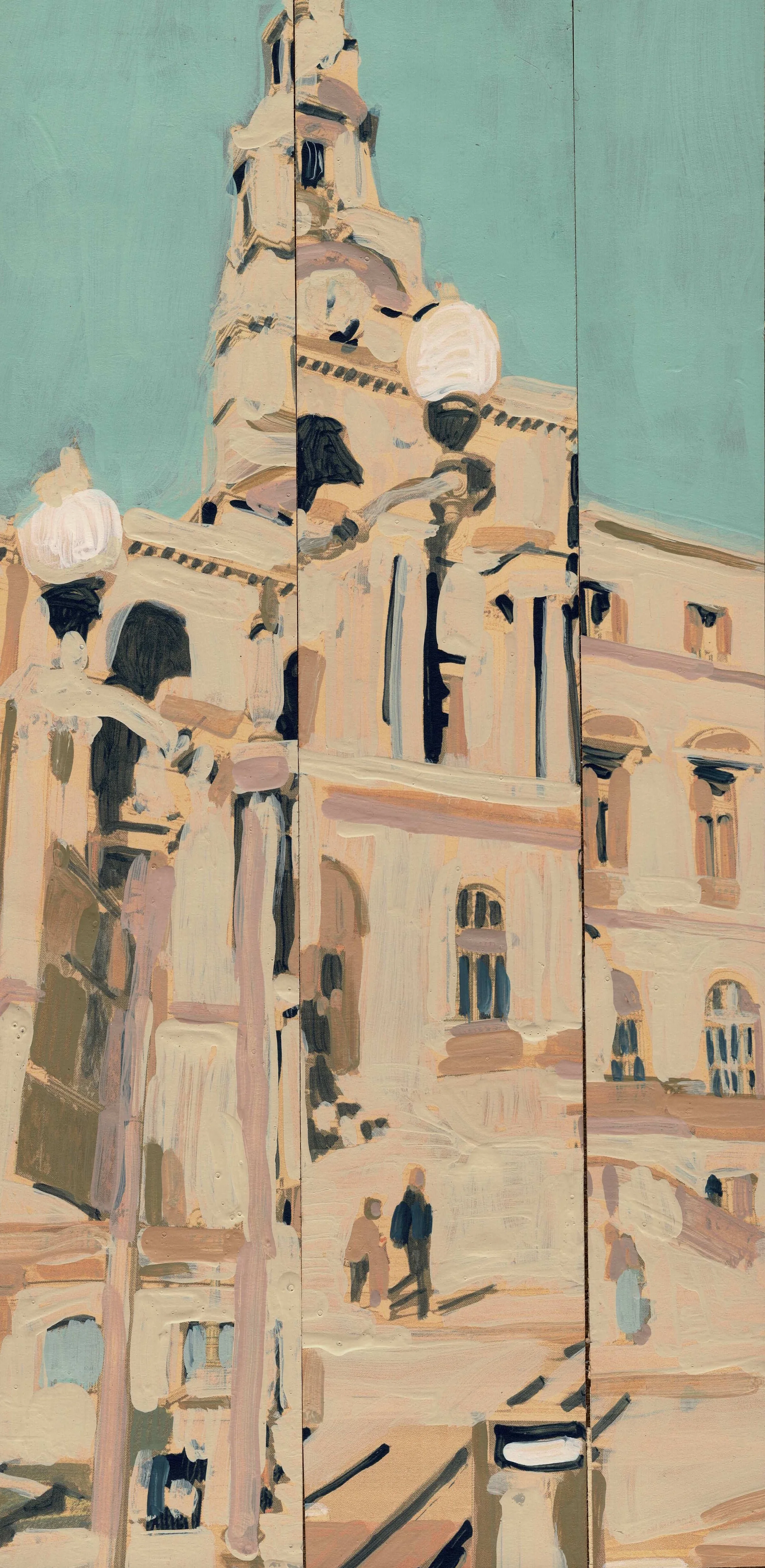
Faded Facade — 2026 Collage, acrylics on faded photo, artist frame 30 x 20 cm
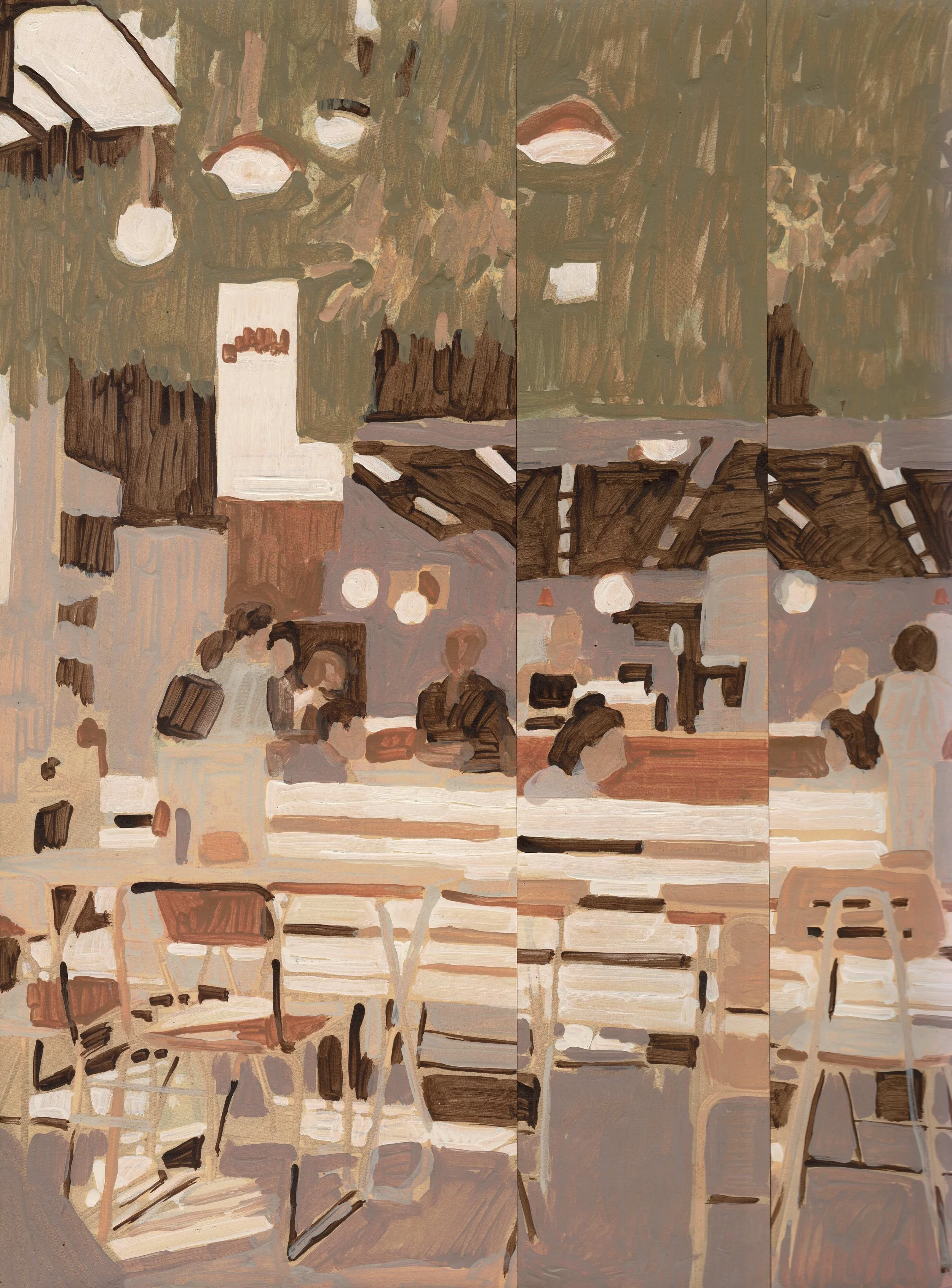
Forgotten Frame — 2026 Collage, acrylics on faded photo, artist frame 40 x 30 cm
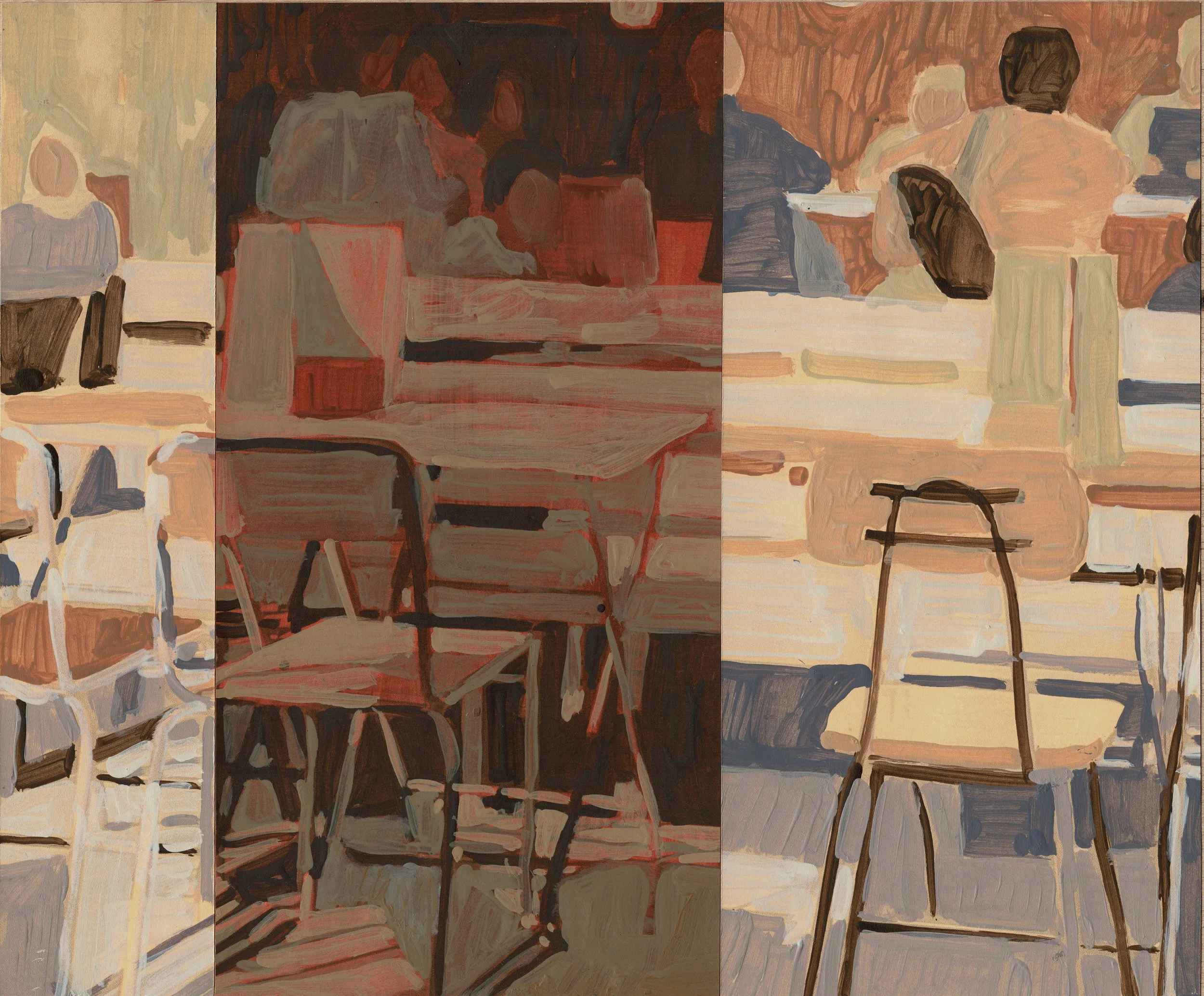
Fragmented Frame I — 2026 Collage, acrylics on faded photo, artist frame 25 x 30 cm
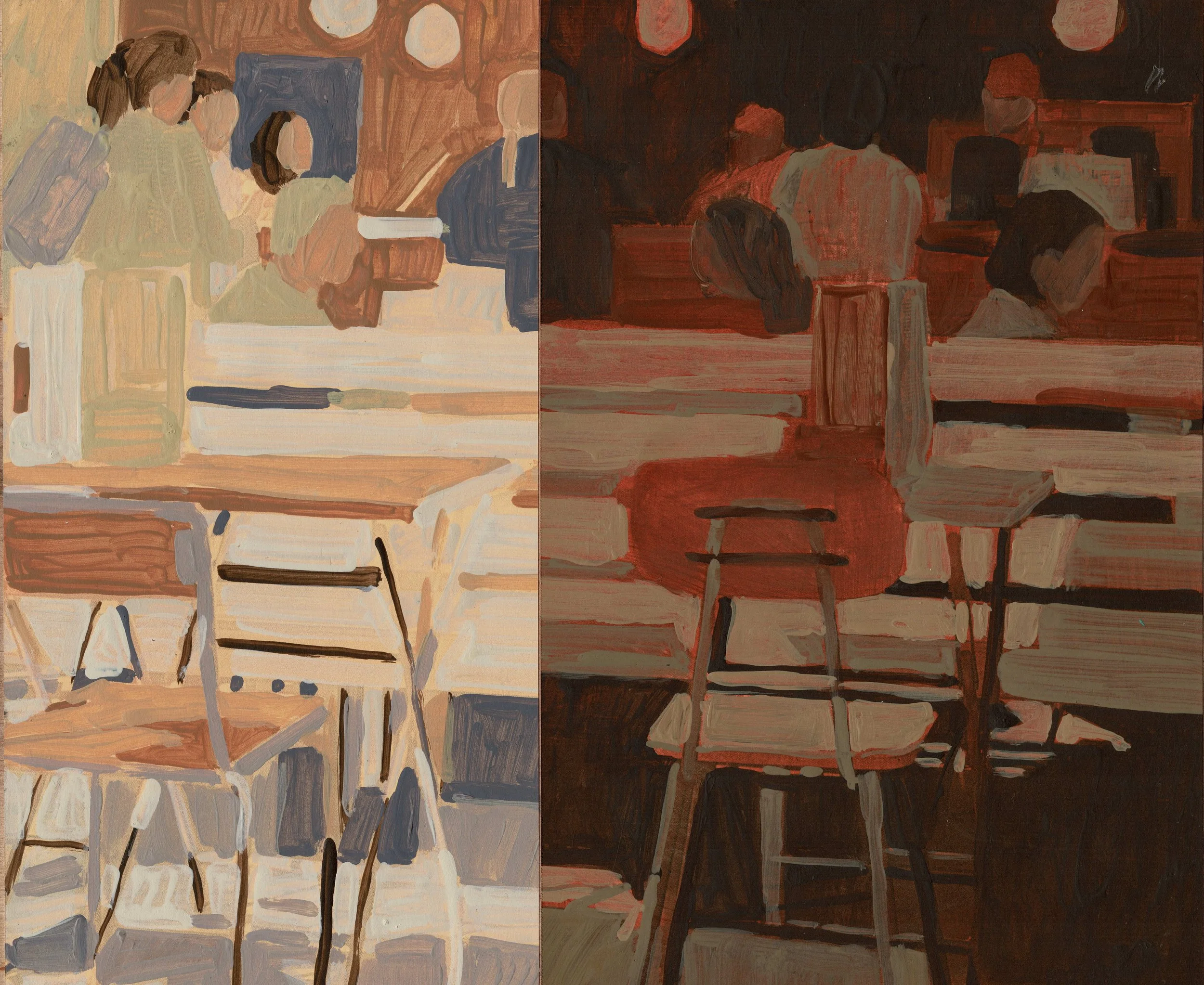
Fragmented Frame II — 2026 Collage, acrylics on faded photo, artist frame 25 x 30 cm
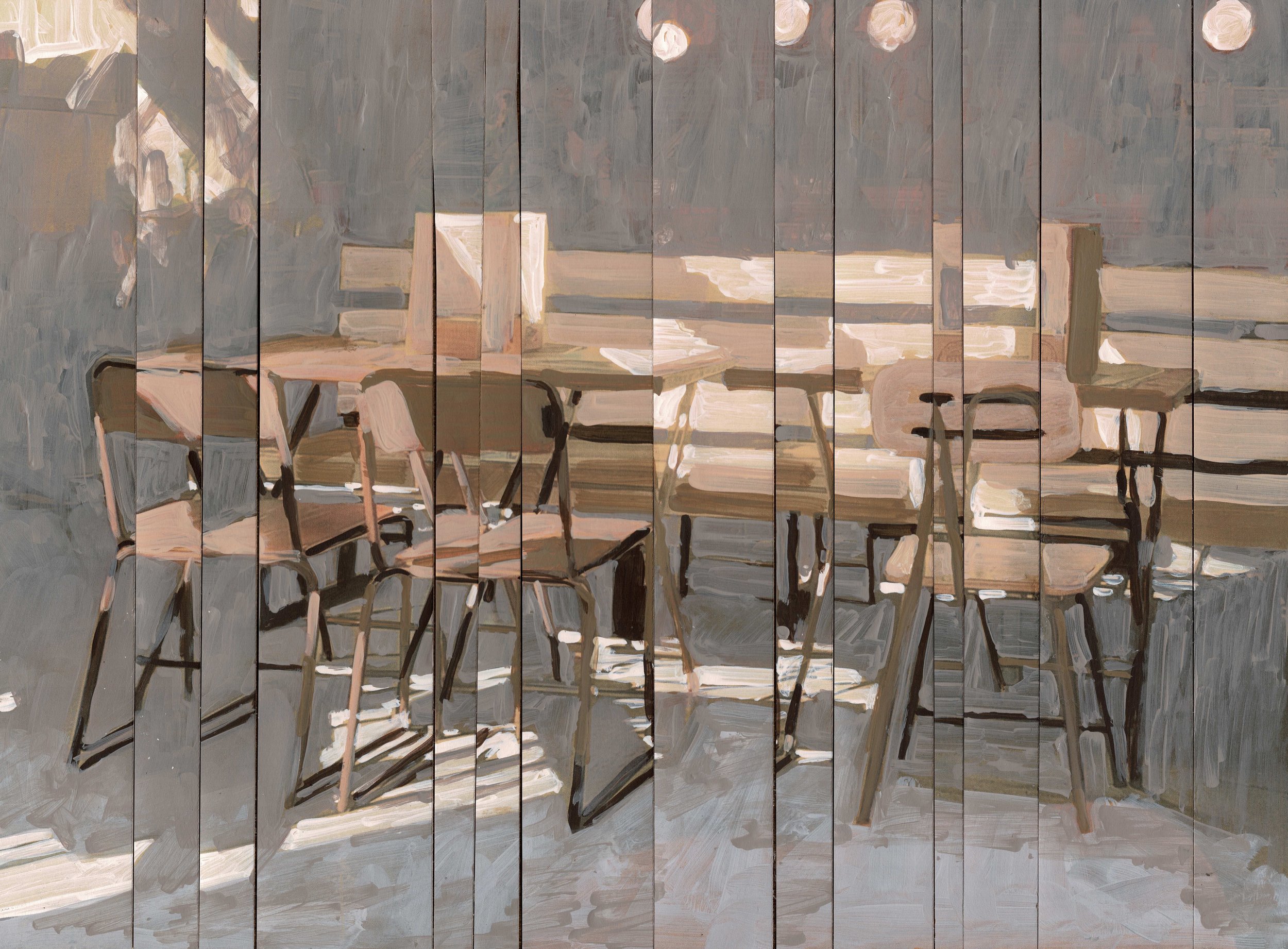
Sitting Still — 2026 Collage, acrylics on faded photo, artist frame 30 x 40 cm
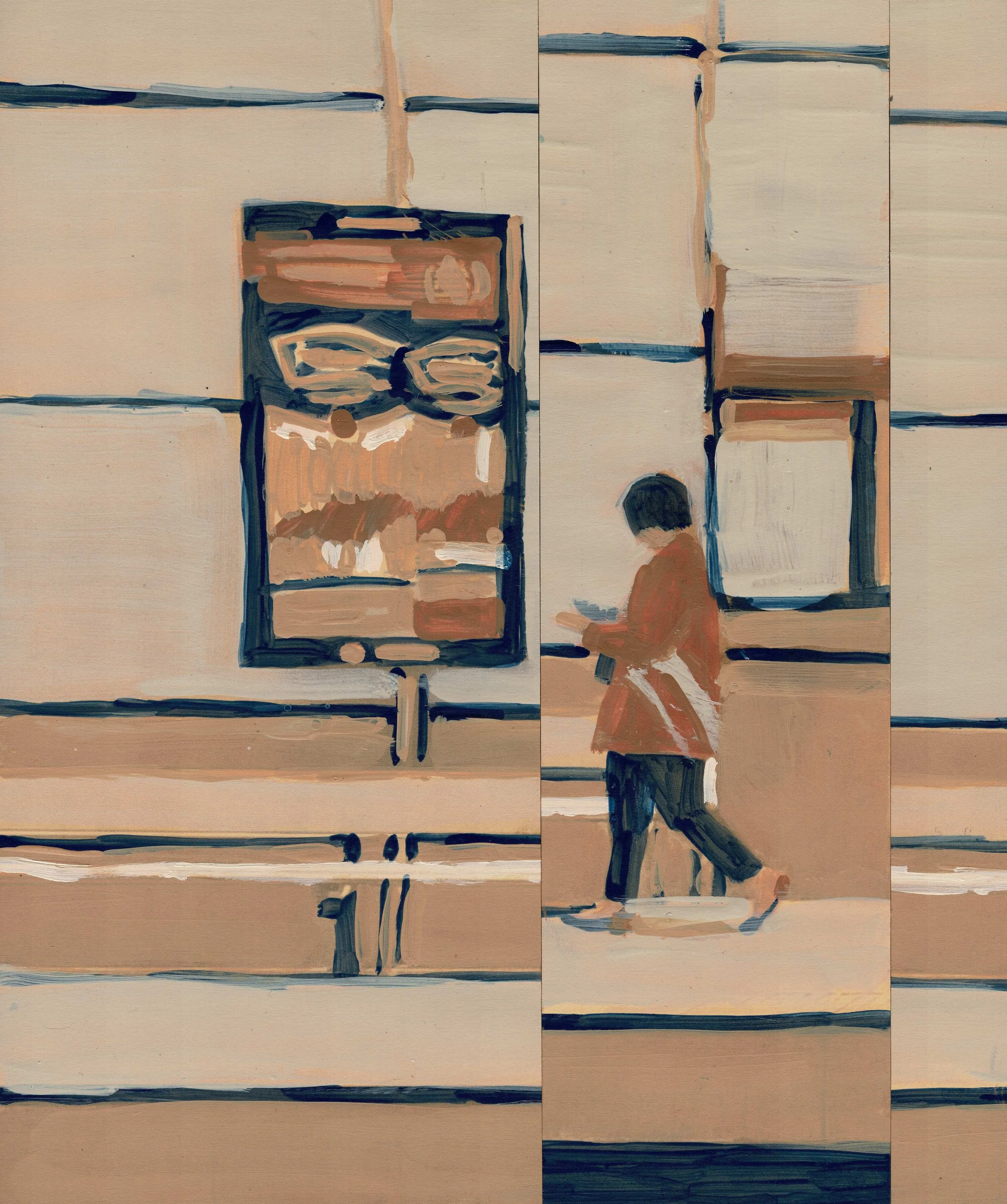
Rushing Residue — 2026 Collage, acrylics on faded photo, artist frame 30 x 25 cm
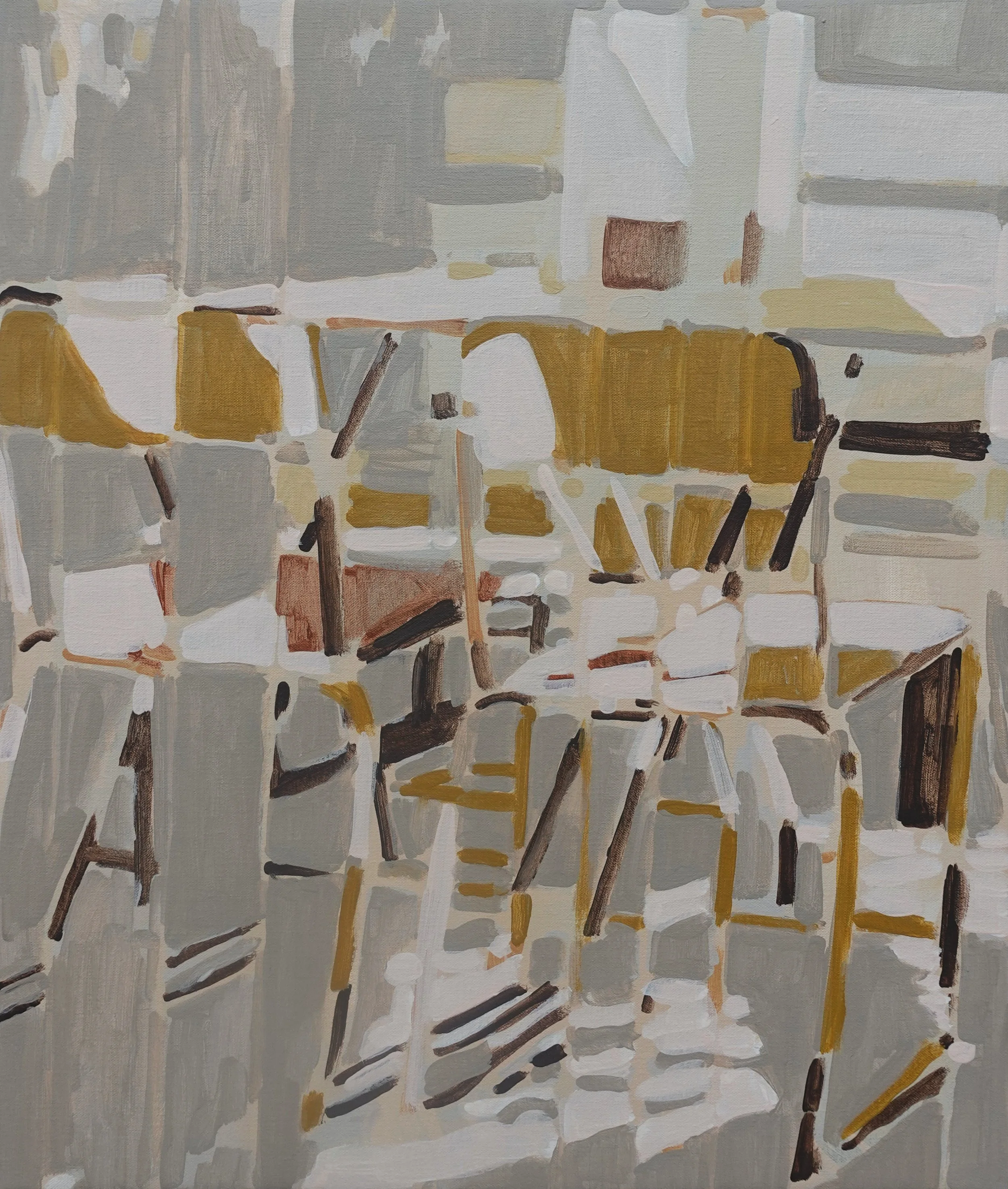
Muted Meeting I— 2026 Acrylics on linen 60 x 50 cm
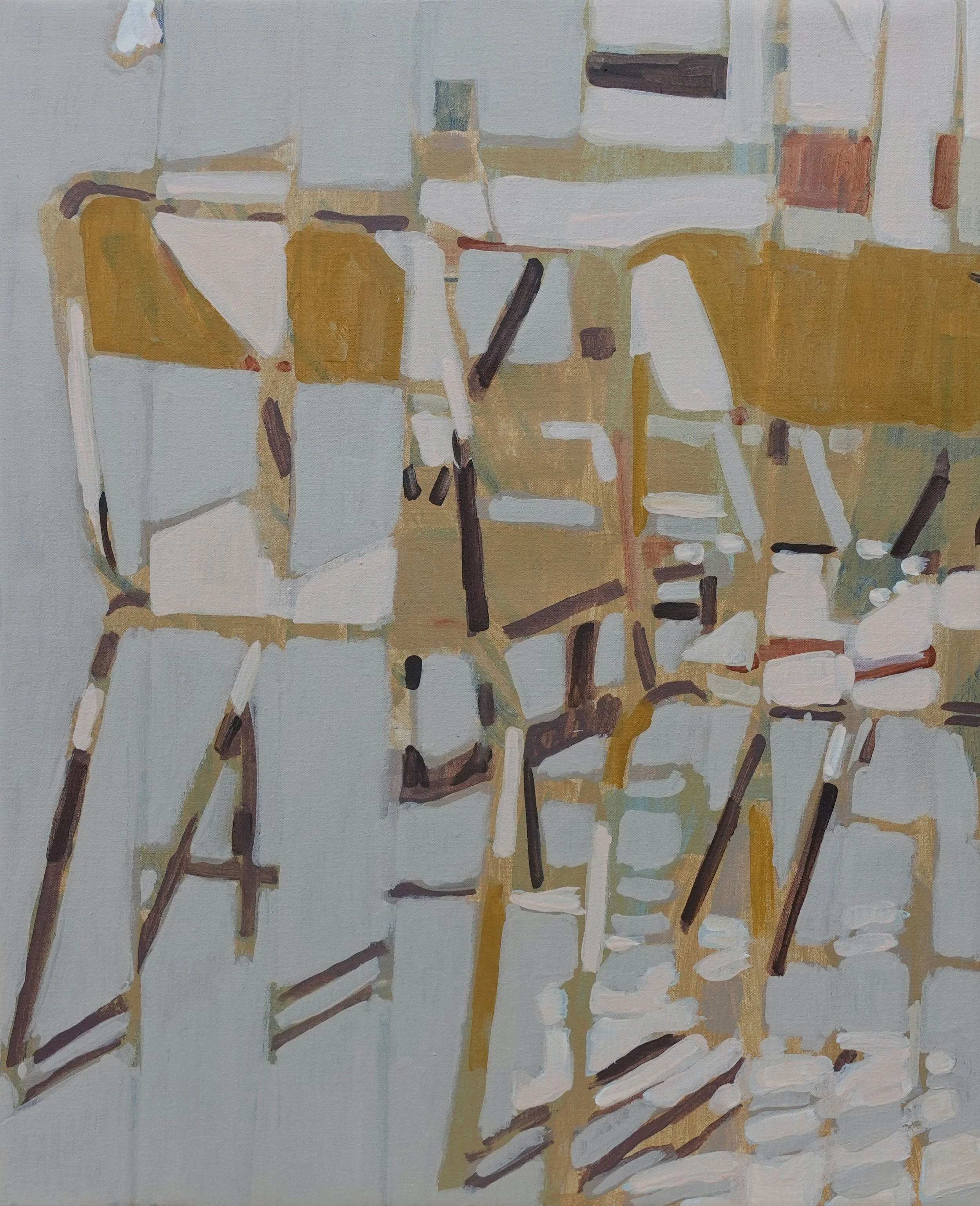
Muted Meeting II— 2026 Acrylics on linen 60 x 50 cm
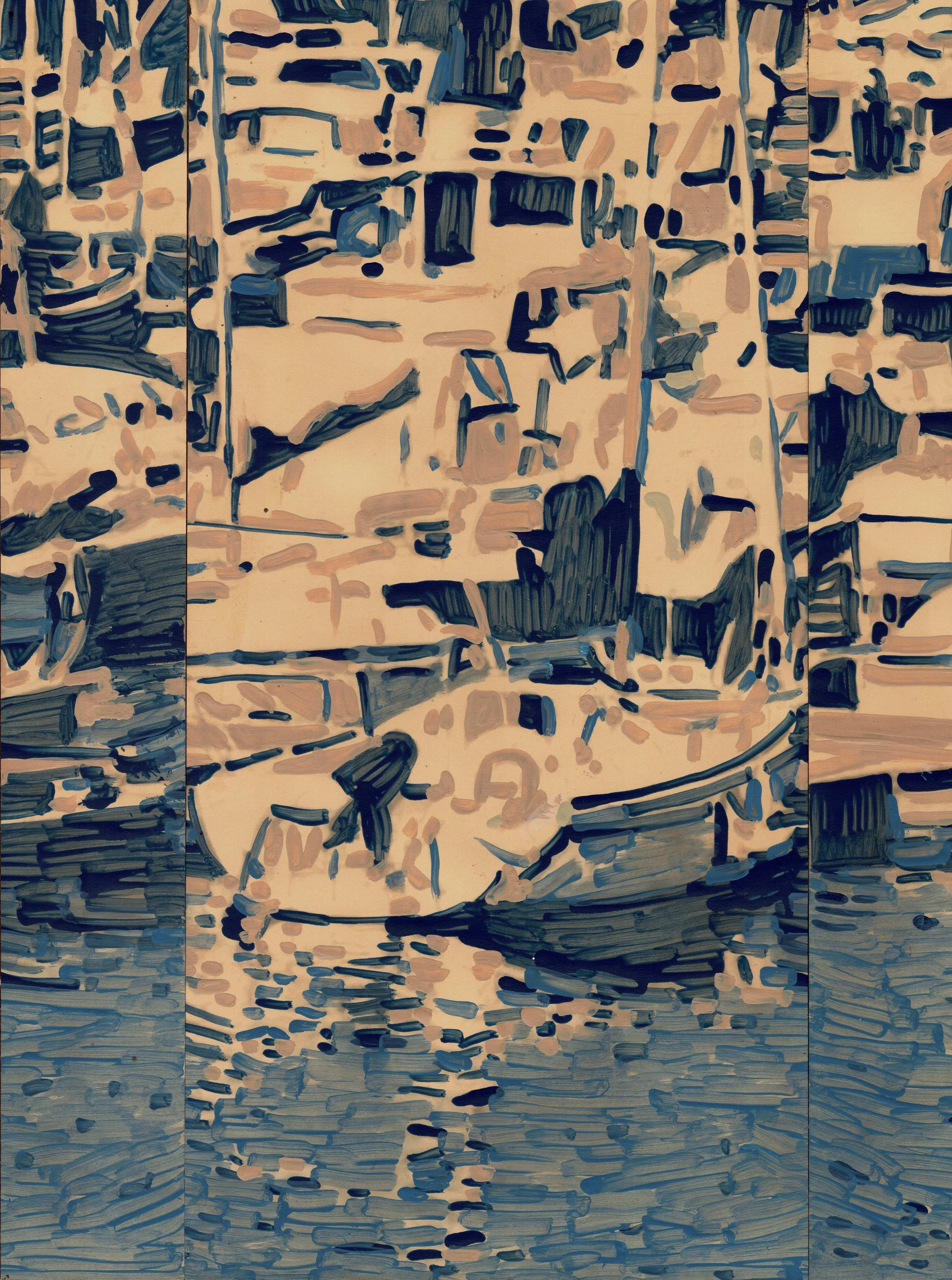
Drifting Desire — 2026 Collage, acrylics on faded photo, artist frame 40 x 30 cm
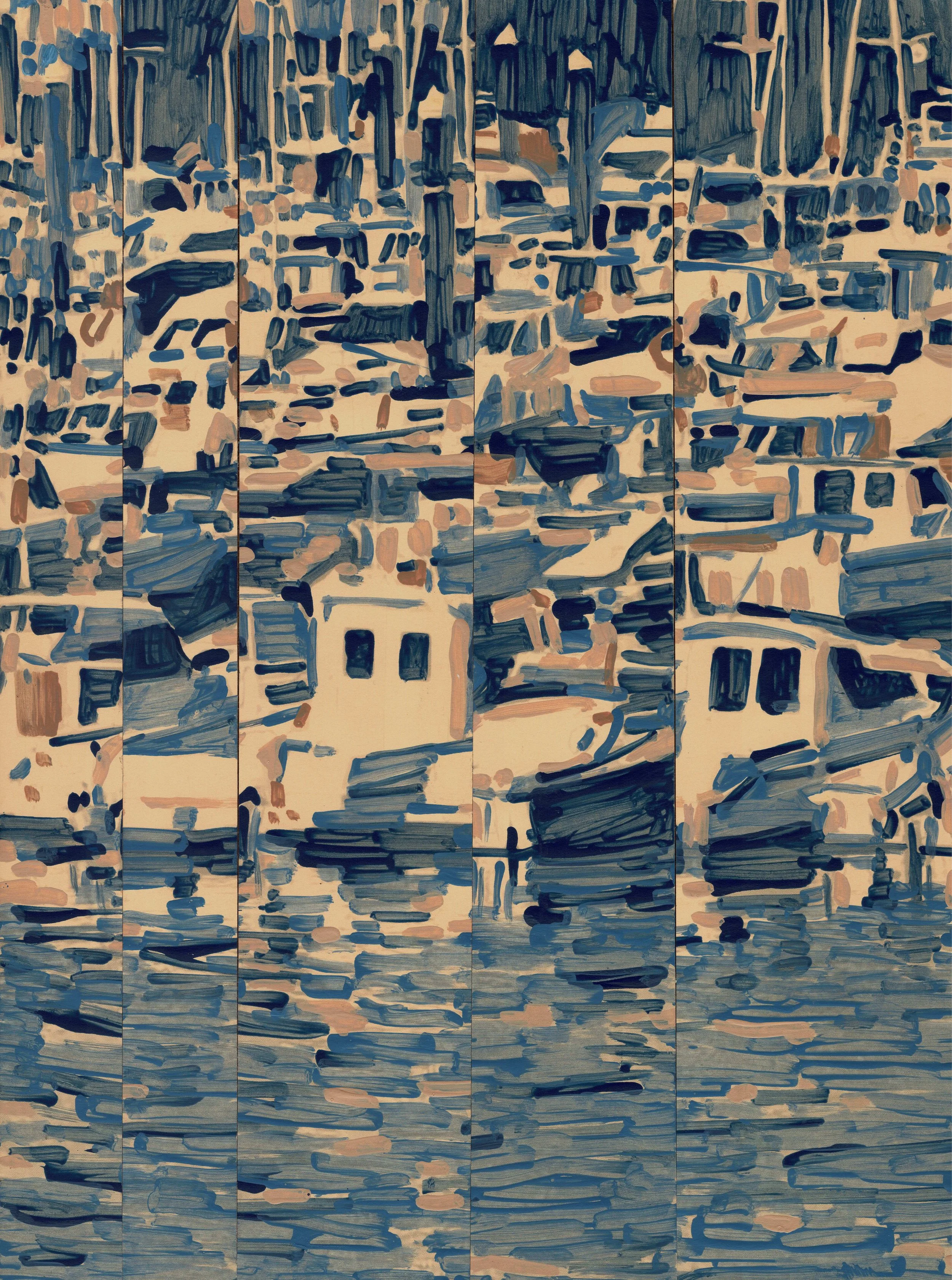
Drifting Dream — 2026 Collage, acrylics on faded photo, artist frame 40 x 30 cm
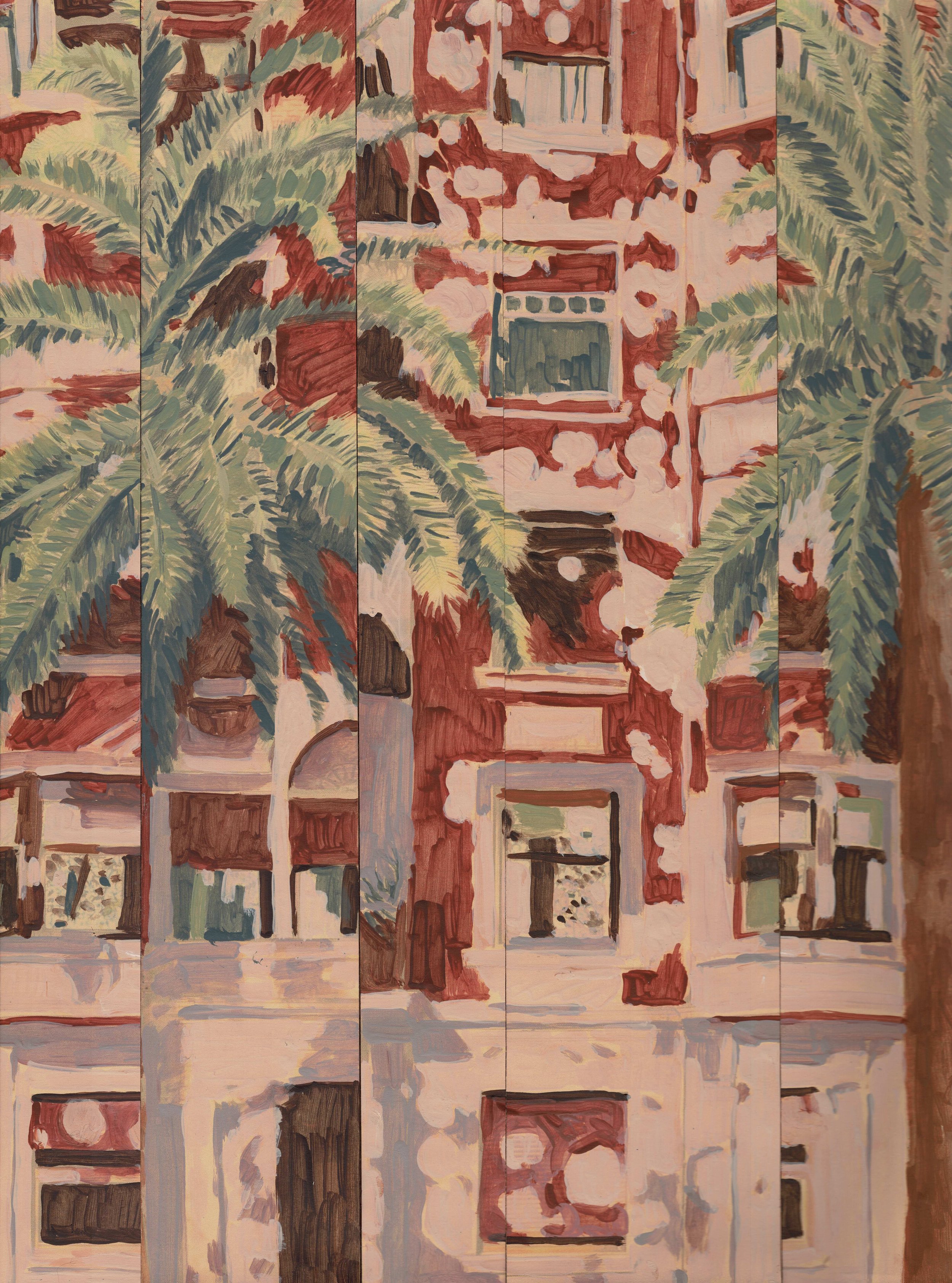
Shadowed Shelter I — 2026 Collage, acrylics on faded photo, artist frame 40 x 30 cm

Shadowed Shelter II — 2026 Collage, acrylics on faded photo, artist frame 40 x 30 cm
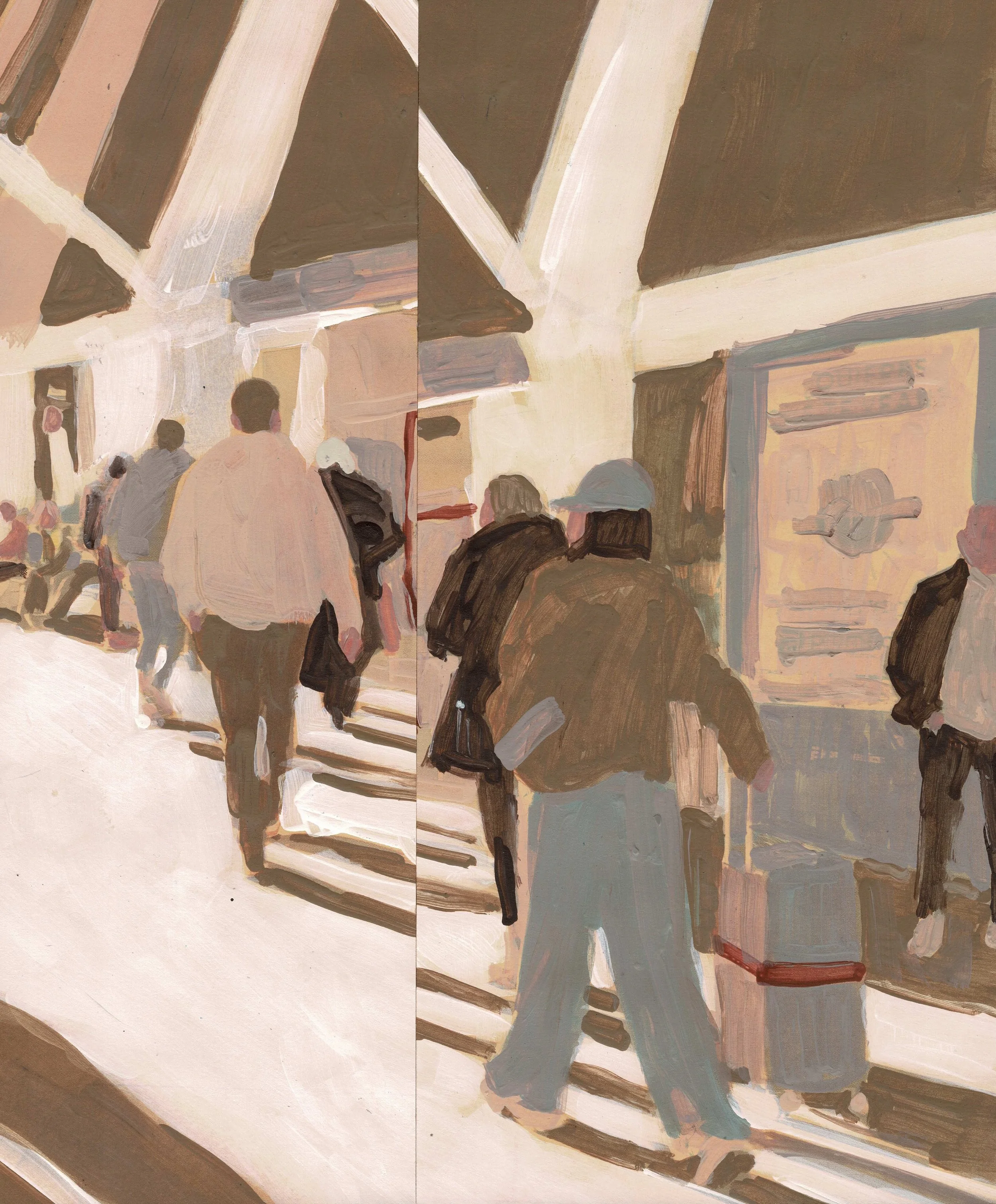
Passing Point — 2026 Collage, acrylics on faded photo, artist frame 30 x 25 cm
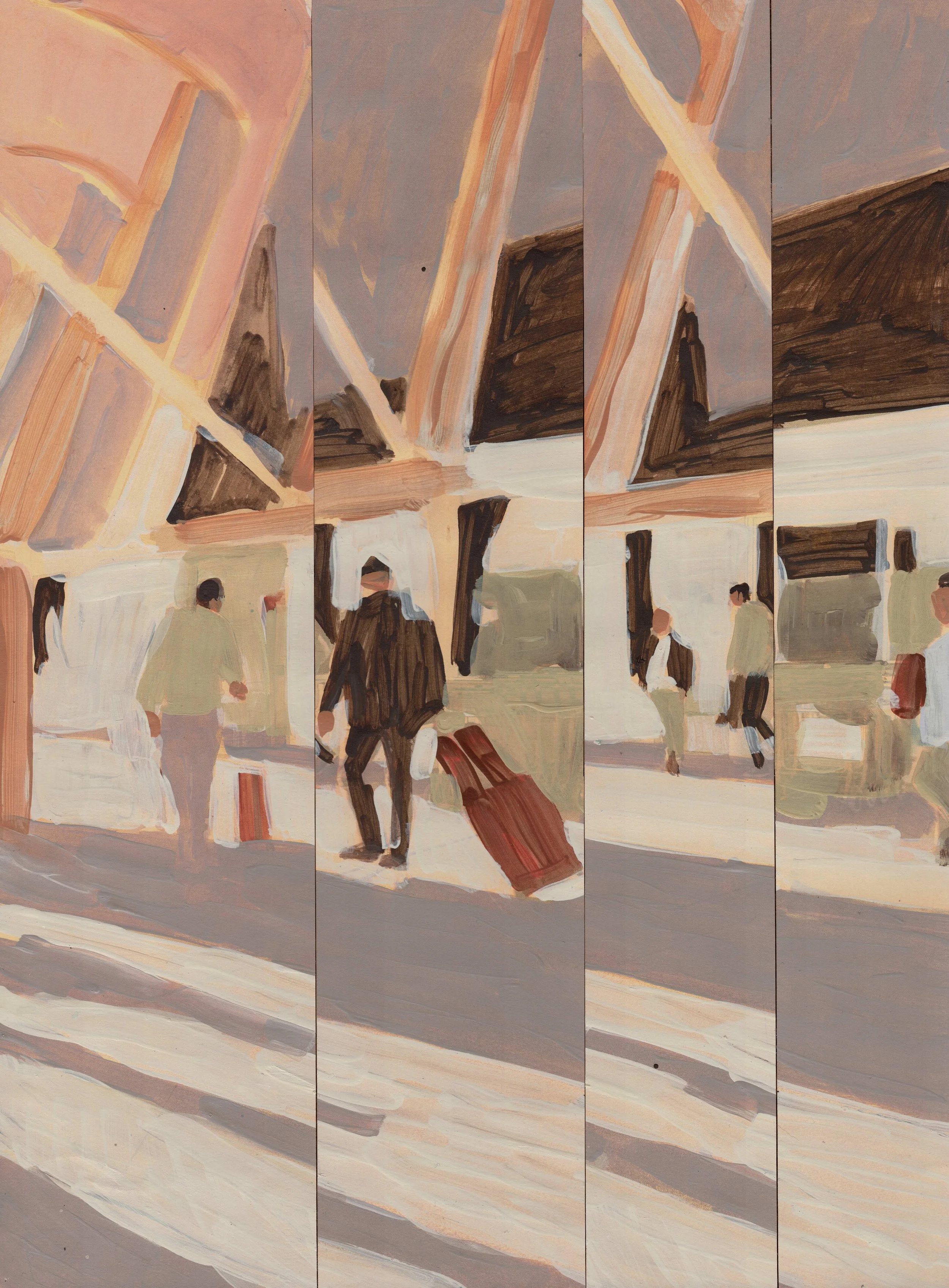
Departing Direction — 2026 Collage, acrylics on faded photo, artist frame 40 x 30 cm
October in Bilbao brought shorter days and a more muted light than a southern summer. The trees were familiar: the kind you find also in Belgium. It did not feel exotic. A few palms stood in front of a red building, filtering the light into something quieter, a small pocket of the south preserved in an otherwise temperate city. Shadowed Shelter holds that fragment. When the collage was projected onto an 80 by 120 cm canvas, details dissolved in the translation. That loss is part of the work.
We found bars and small places to eat: corners of the city built for slowing down. Forgotten Frame came from one of them. The chairs reappear in Sitting Still, further simplified. Then, in Muted Meeting I and II, the collage was used to diffuse the image further: more information was removed. Each step in the series enacts the same logic: memory does not hold its details. It holds its feeling.
At the Guggenheim, a Barbara Kruger installation provided the source material. Photographed, painted over, and cut apart, the images were reassembled into a shifted, reordered sequence. In Barbara's Bite I–III, her texts become nearly unreadable, yet they continue to invite reading.
Bilbao felt like community. On weekday mornings there were people walking dogs, friends running, neighbours talking on the many benches placed throughout the city. On Friday evenings the whole thing tipped into something else: everyone outside at once, noise layering on noise, the atmosphere quite literally buzzing.
The Bilbao series is painted on beige-toned paper in creamy, ochre-inflected colours that echo that particular October light. But these works carry something else: the first sustained use of a methodology that has since become central to the practice. Each piece was painted specifically to be cut. The paintings were sliced into vertical strips and reassembled in a new sequence. The original image shifts. Something recognisable survives, but the eye takes a moment to settle it, searching for the logic of what has moved.
This is not destruction. It is closer to how memory actually works: the atmosphere held intact, the colours preserved, while the precise spatial relationships quietly rearrange themselves. The collage does not misrepresent the original. It tells the truth about how we remember it. But that truth is unstable, and over time, different versions of the same memory become equally true.
"The viewer becomes aware of the image as both representation and object, moving between reading the scene and recognising the physical intervention that has altered it. The combination of painting, photography, cutting, and reconstruction results in works that feel both familiar and unsettled, inviting viewers into a compelling dialogue between memory, perception, and place. The fragmented structure of Sitting Still enhances the quiet narrative of the solitary figure, reinforcing the themes of observation, memory, and fleeting experience that run throughout the series."
— Kurt Beers, BEERS London
View other series → Provence → Ausfahrt → Beach Play → Greetings from …