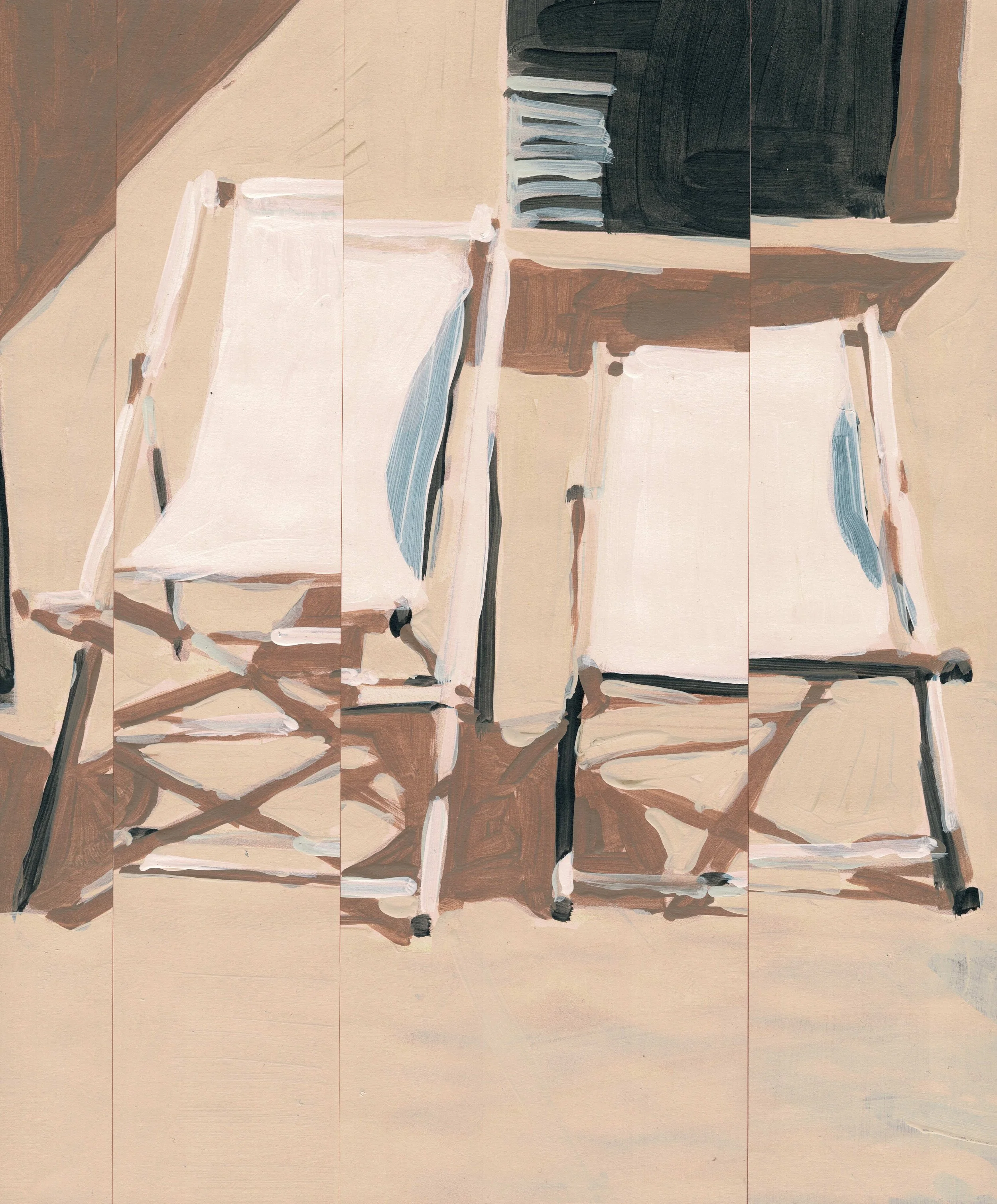
Restful Row I — 2026 Collage of acrylics on paper 30 x 25 x 2,5 cm
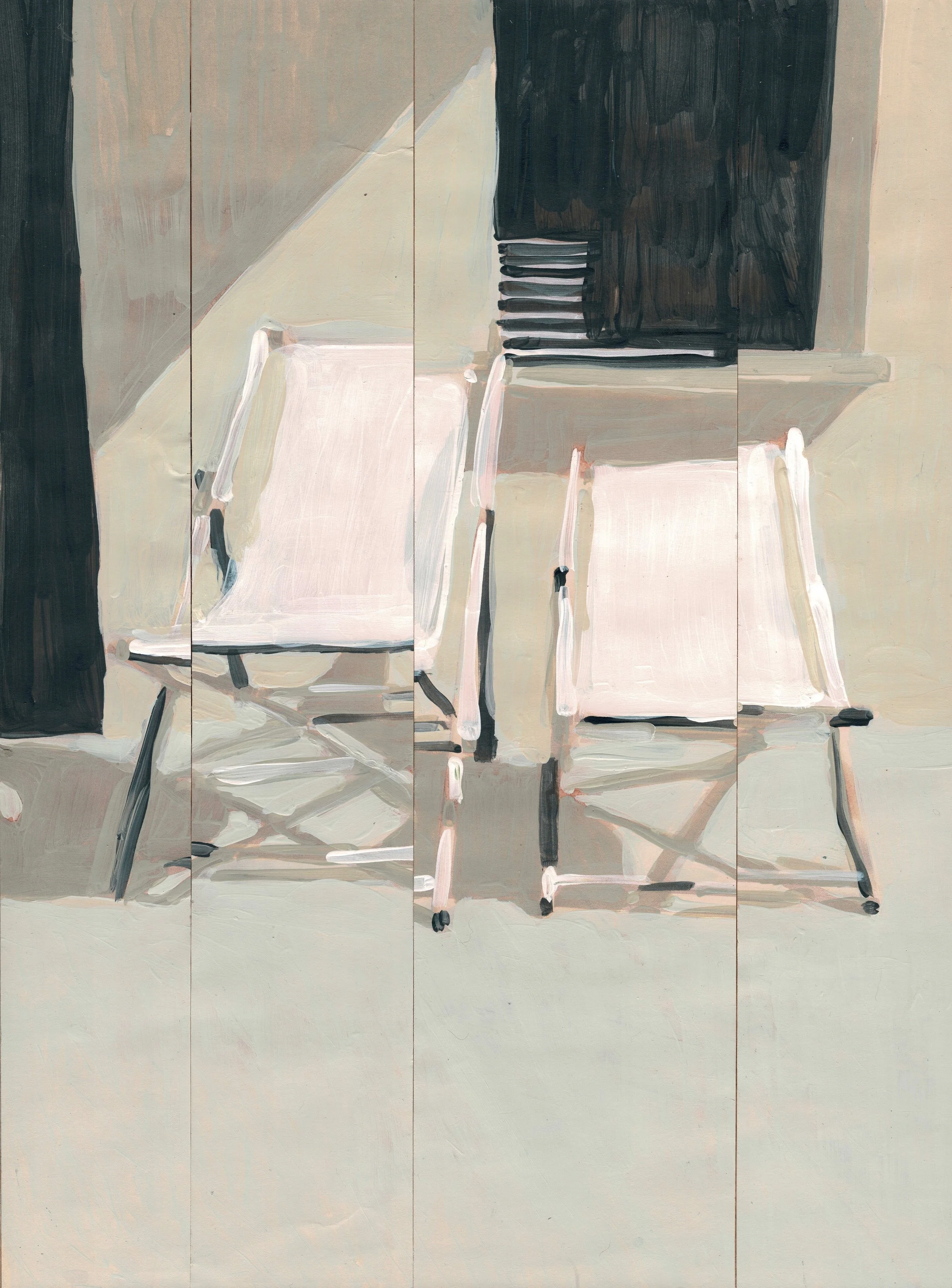
Restful Row III — 2026 Collage of acrylics on paper 40 x 30 x 2,5 cm
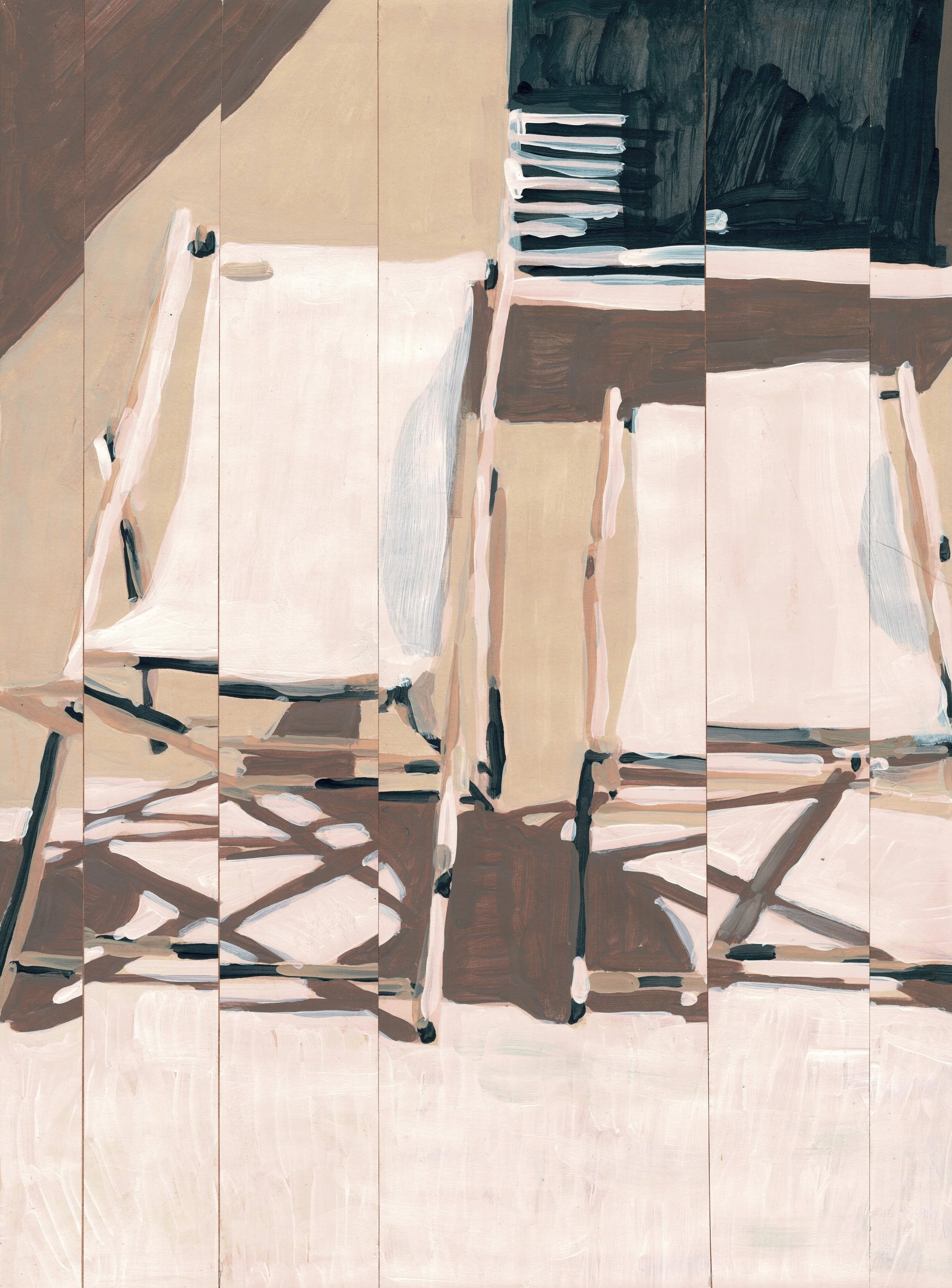
Restful Row II — 2026 Collage of acrylics on paper 40 x 30 x 2,5 cm
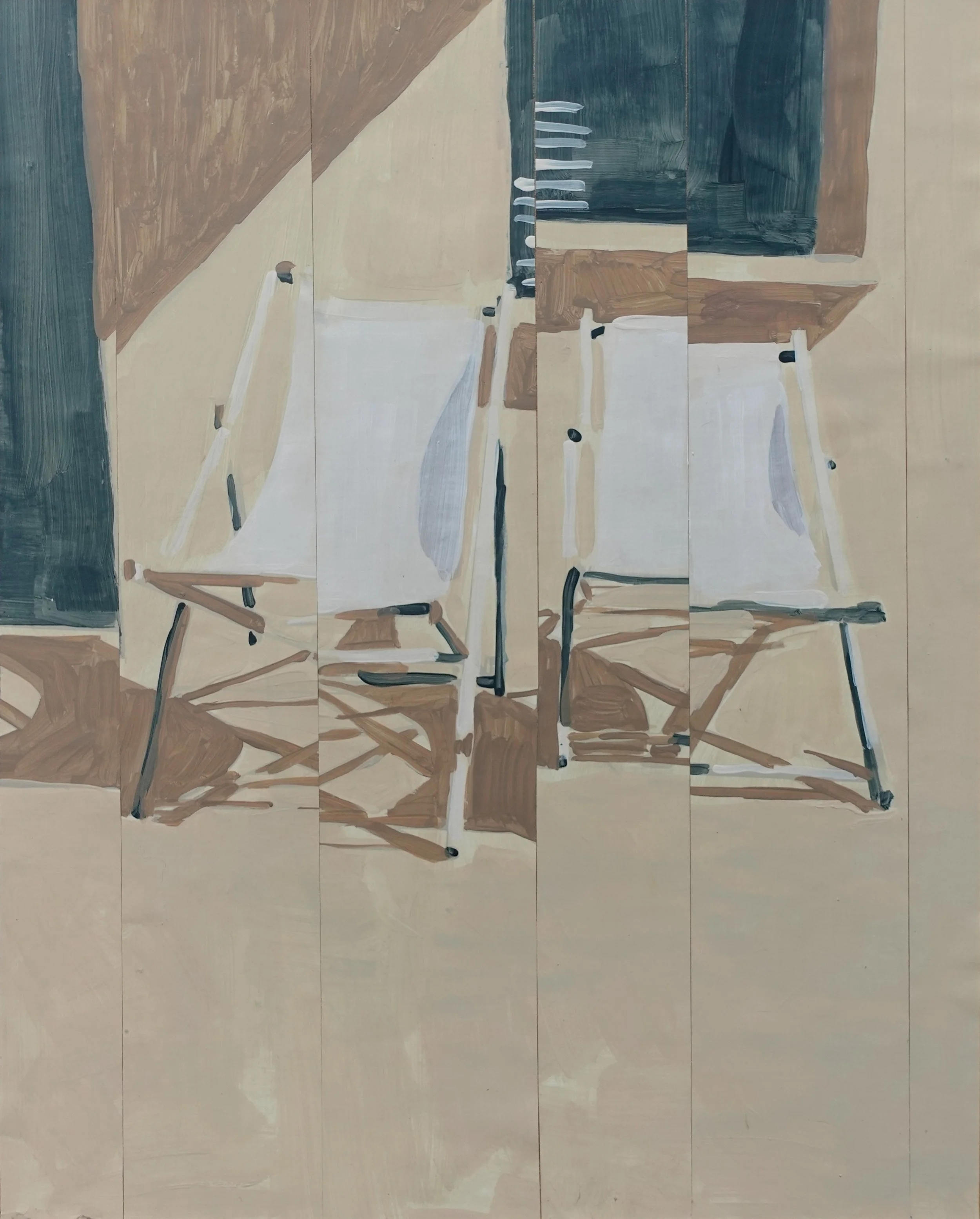
Restful Row IV — 2026 Collage of acrylics on paper 50 x 40 x 2 cm
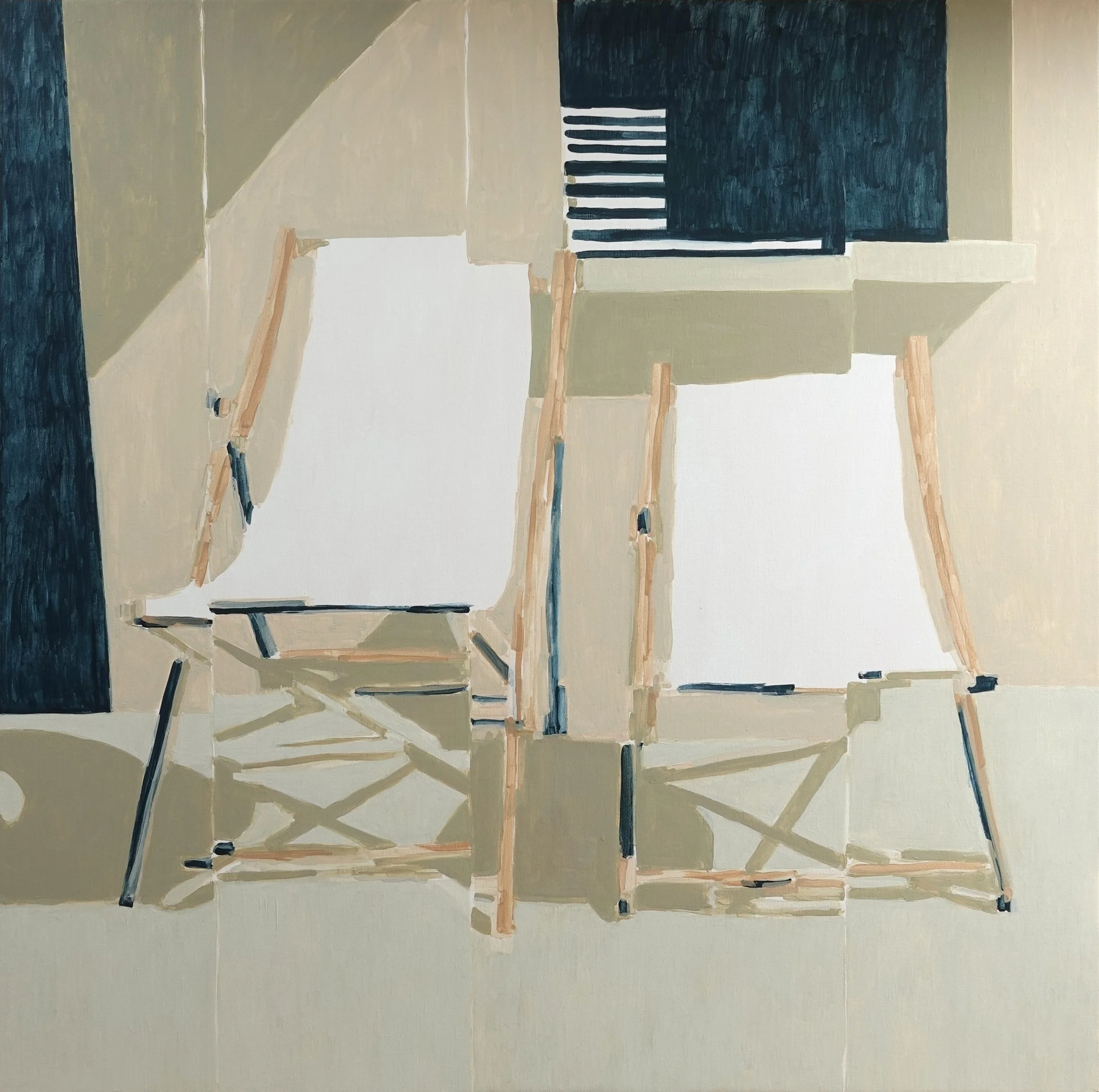
Restful Row V — 2026 Acrylics on linen 150 x 150 x 4 cm
Provence, at the end of June 2026. They went looking for the region's famous unhurried light. A companion with a torn Achilles tendon, operated on the day before they left almost changed plans but neither wanted to cancel a vacation longed for so long. A series was already taking shape and needing to be documented. They left as planned, but in chaos. What followed was, technically, a holiday. Paradise and its opposite shared the same rented terrace for a week, and neither one ceded ground.
Restful Row takes its name, not without irony, from the two sun loungers on that terrace that came with the house in Saint-Étienne-du-Grès. They were tried once. They were unusable, offering no comfort and no rest. They will remain decorative until their removal. The result is a single photograph, worked into five versions in shifting registers of warmth, from rose through to a chalky beige, then sliced into vertical strips and reassembled slightly out of true. The image moved but everything around it froze.
Seen now, the row of two empty chairs reads less like a record of rest than a monument to its absence, two pieces of garden furniture doing a very convincing impression of a normal holiday.
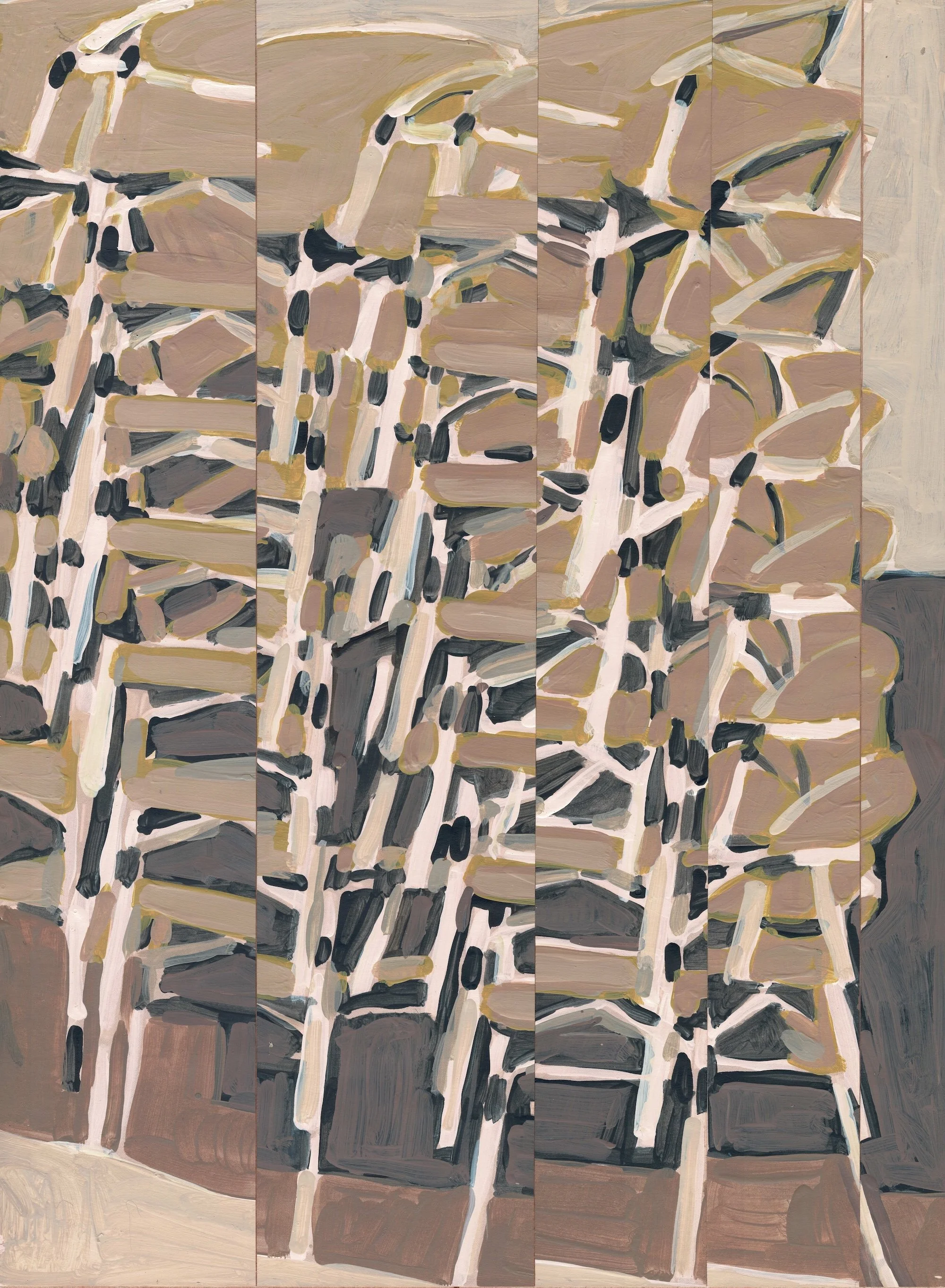
Stacked Seats I — 2026 Collage of acrylics on paper 40 x 30 x 2,5 cm
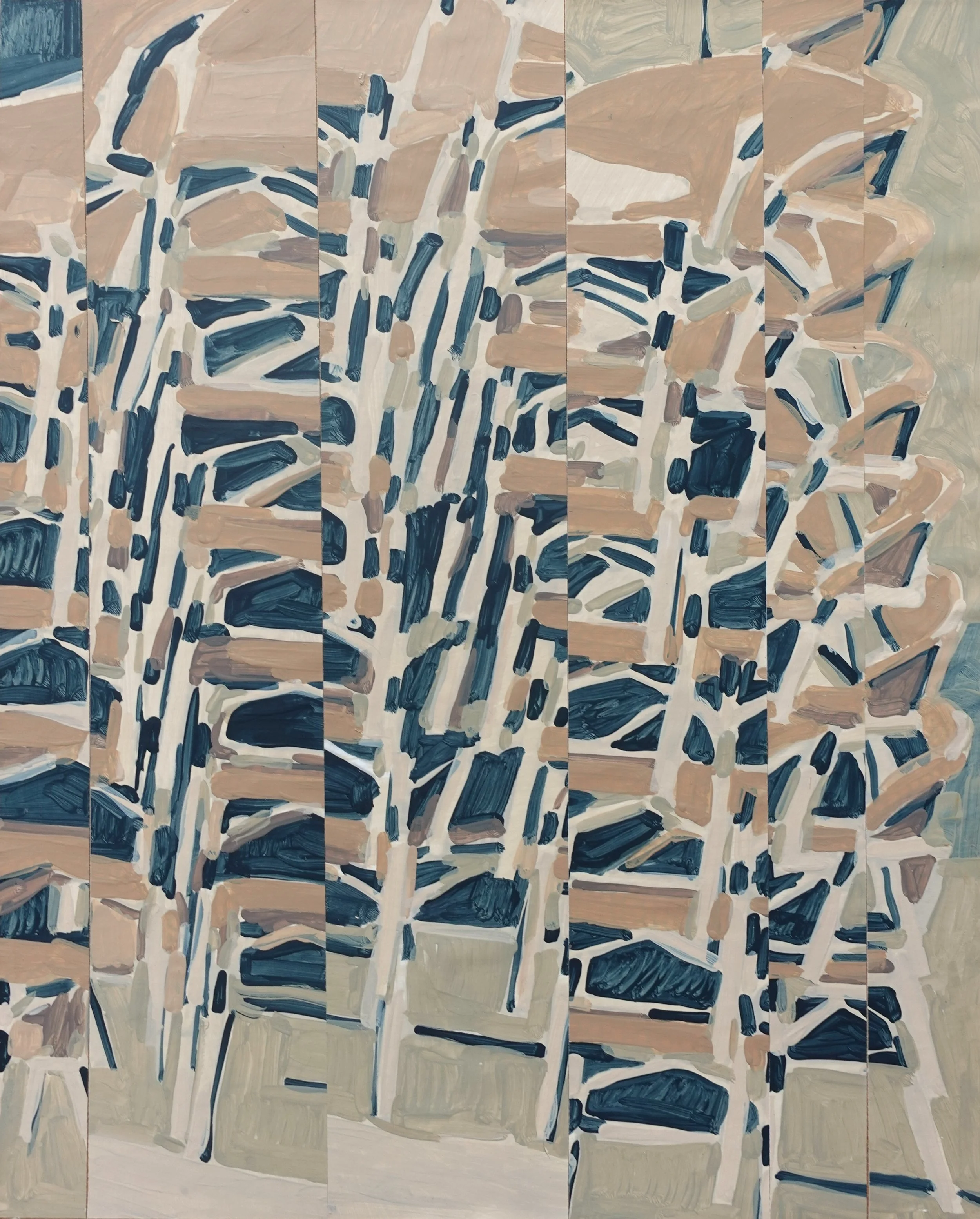
Stacked Seats II — 2026 Collage of acrylics on paper 50 x 40 x 2 cm
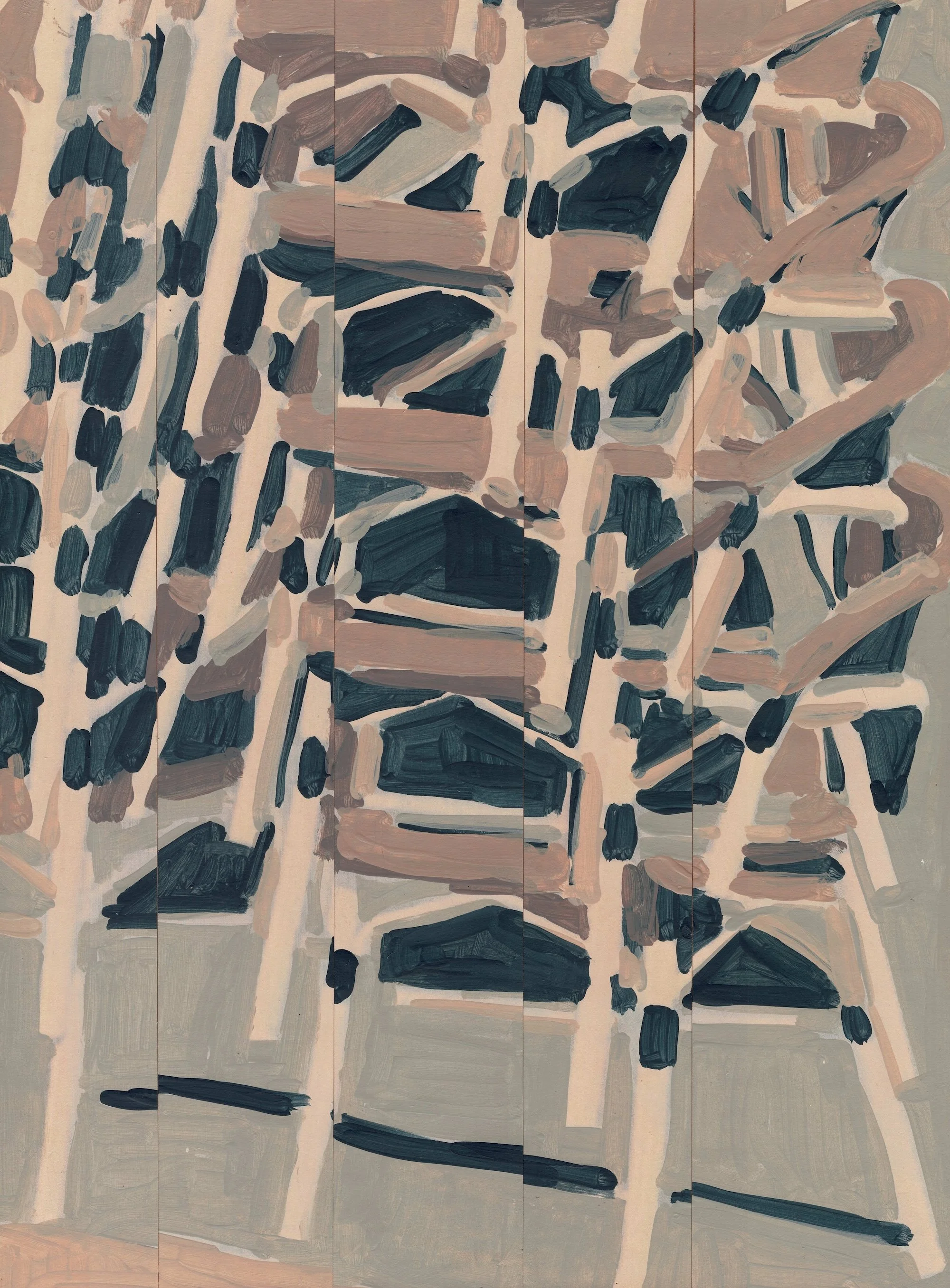
Stacked Seats III — 2026 Collage of acrylics on paper 40 x 30 x 2,5 cm
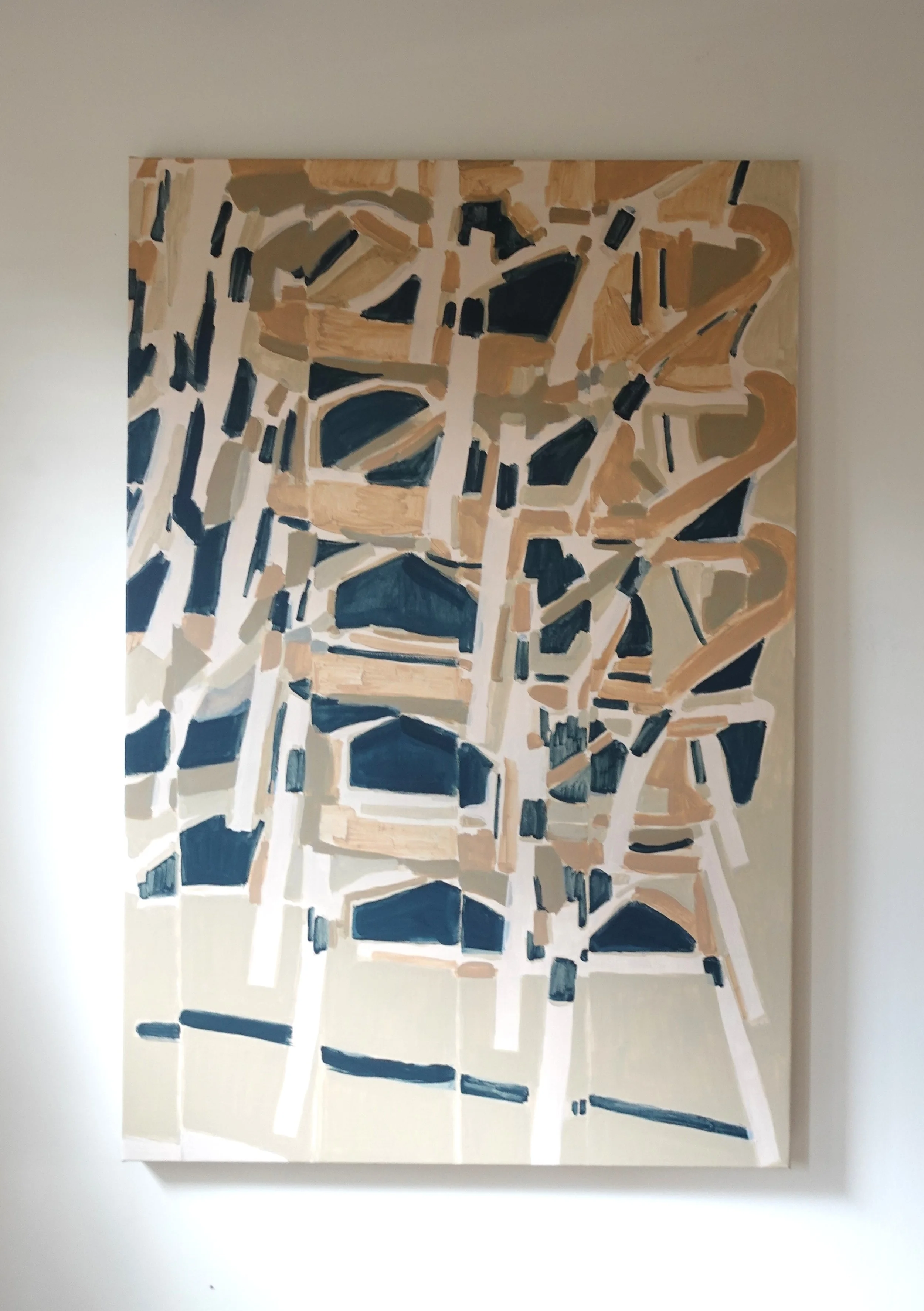
Stacked Seats IV — 2026 Acrylics on linen 150 x 100 x 4 cm
Stacked Seats: chairs, stacked at the terrace edge in Provence, waiting to be unstacked and set out for the next round of tourists. The subseries carries that same image across four works. Each paper work was cut into vertical strips and shifted. This reconstruction abstracts the original image and makes it more difficult to read.
One of the versions exists twice: one of the paper collages was projected and painted onto linen, a second translation where more information is lost again. The seats are stacked and waiting to be unstacked; the paintings are cut and waiting to be read.
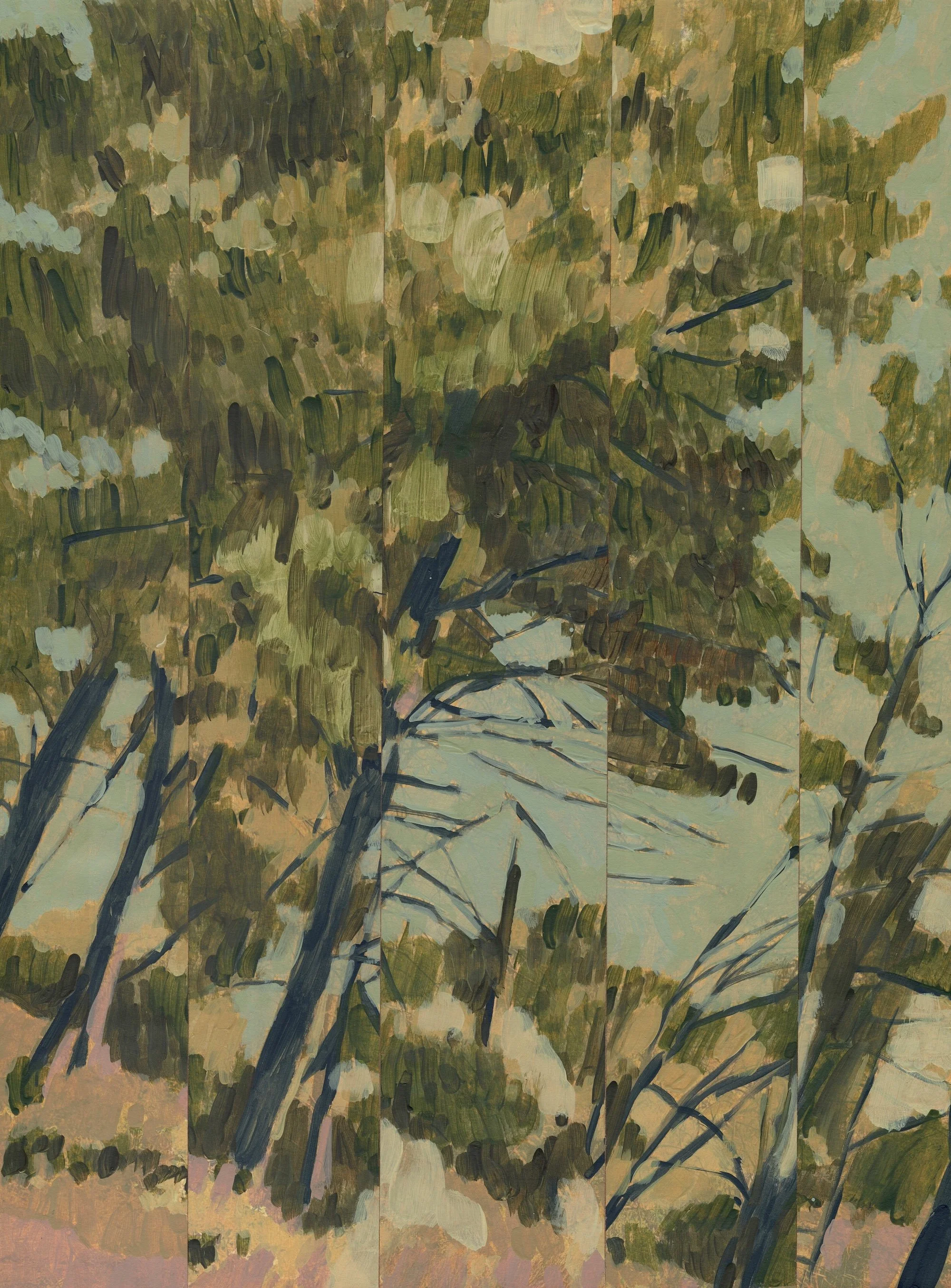
Tilting Trees I — 2026 Collage of acrylics on paper 40 x 30 x 2,5 cm
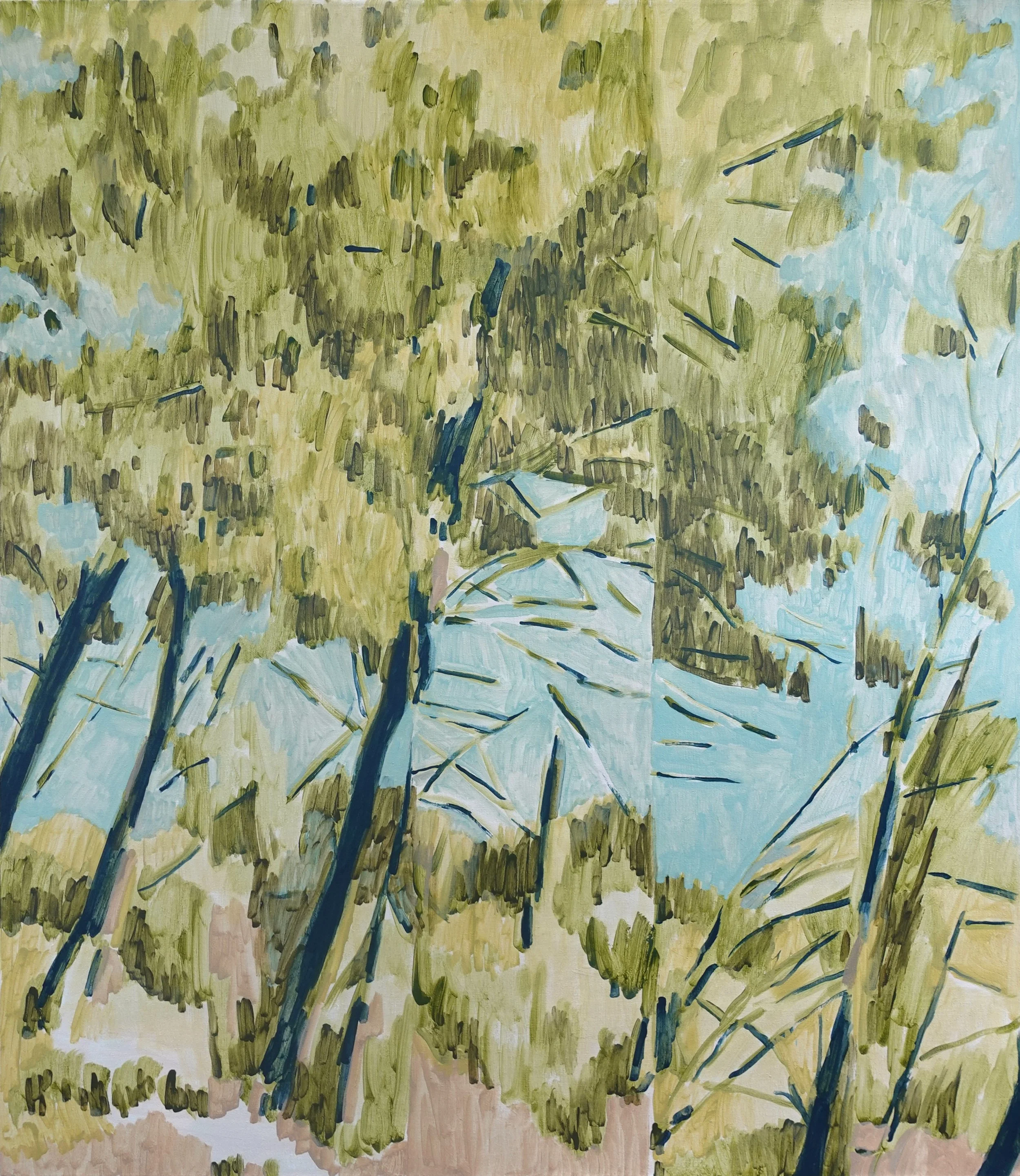
Tilting Trees II — 2026 Acrylics on linen 150 x 130 x 2 cm
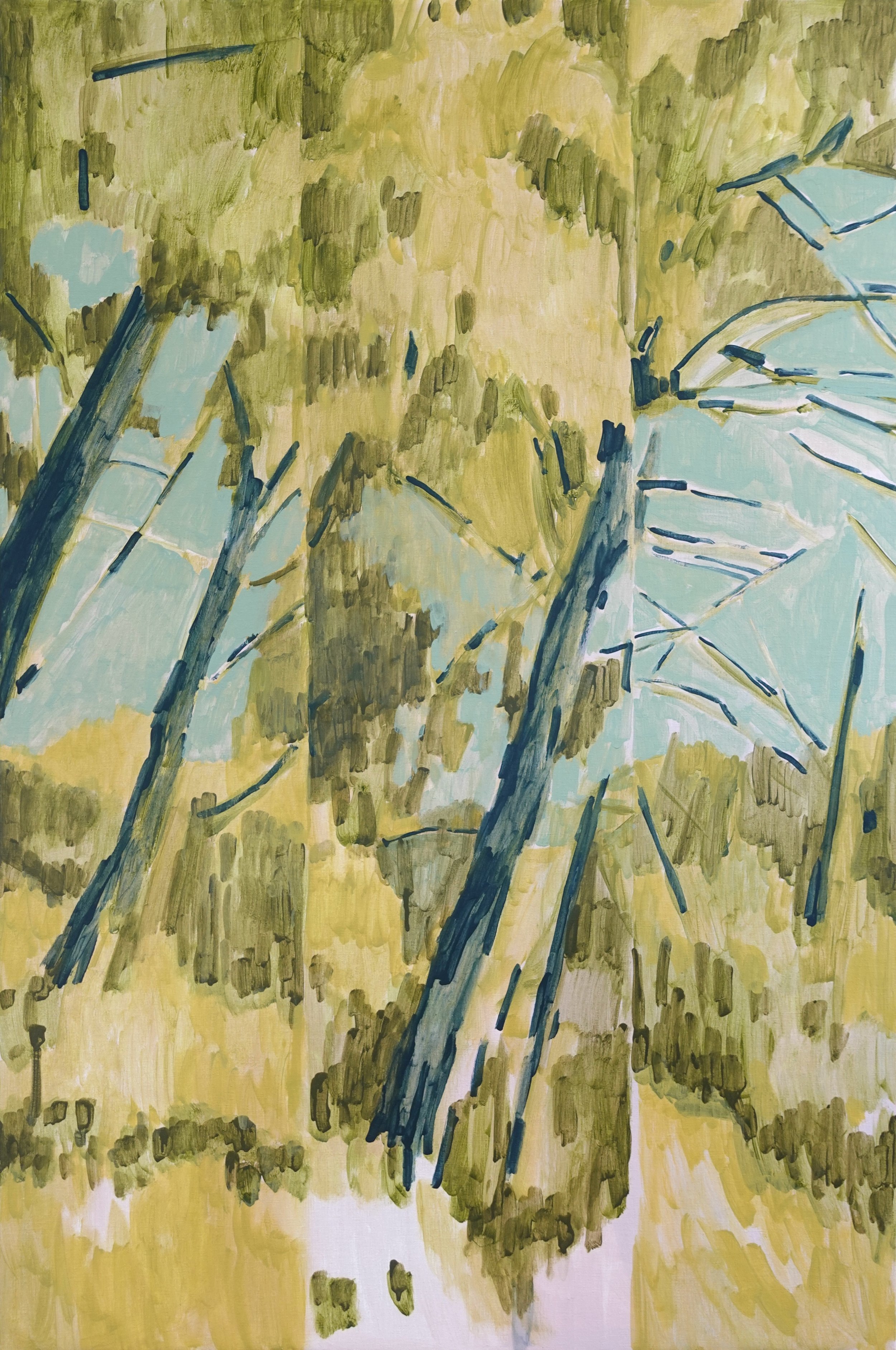
Tilting Trees III — 2026 Acrylics on linen 150 x 100 x 4 cm
Tilting Trees began with a single photograph, taken on an early morning walk to a chapel set high on a hillside, early enough to beat the heat. From the chapel's panoramic view, the hillside grouped its trees at an angle: not upright, but tilted against the slope. That single photograph was painted over first, becoming a work of its own, then cut apart on paper.
From that sliced and reconstructed paper version, the image was projected twice more, onto two large canvases. One holding the full view and one zoomed in a bit more. Three works from one photograph, doubled because it asked to be.

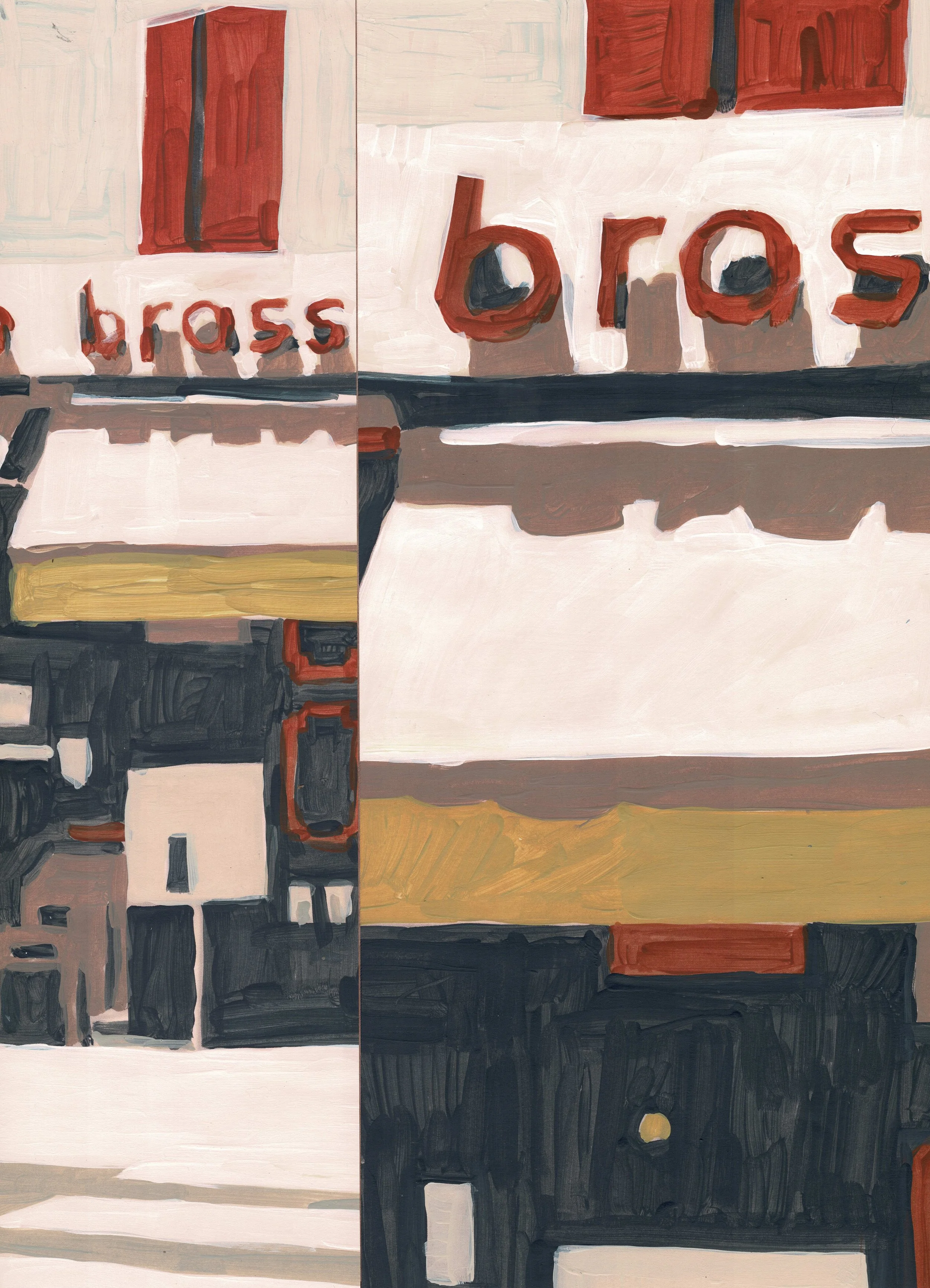


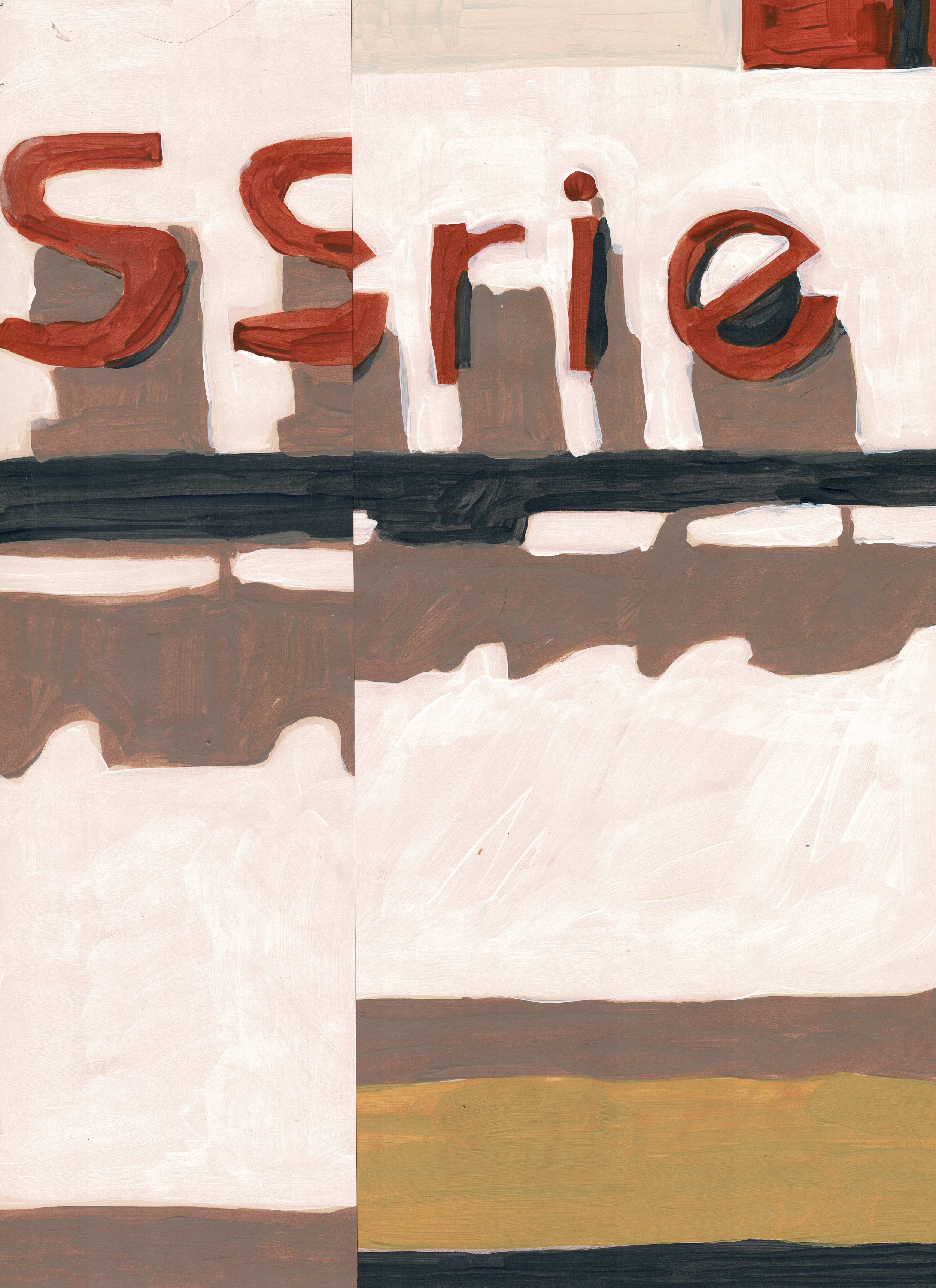
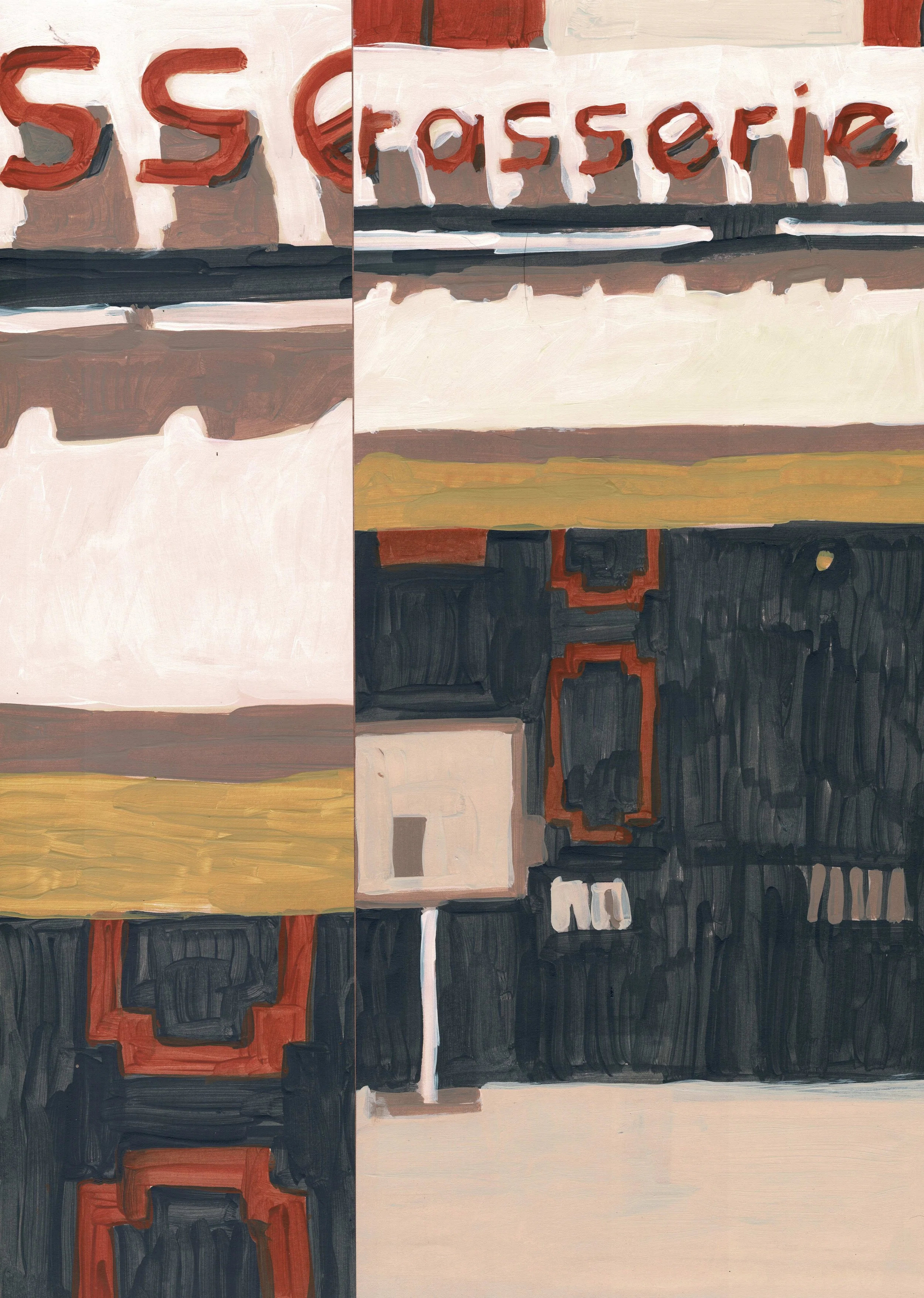
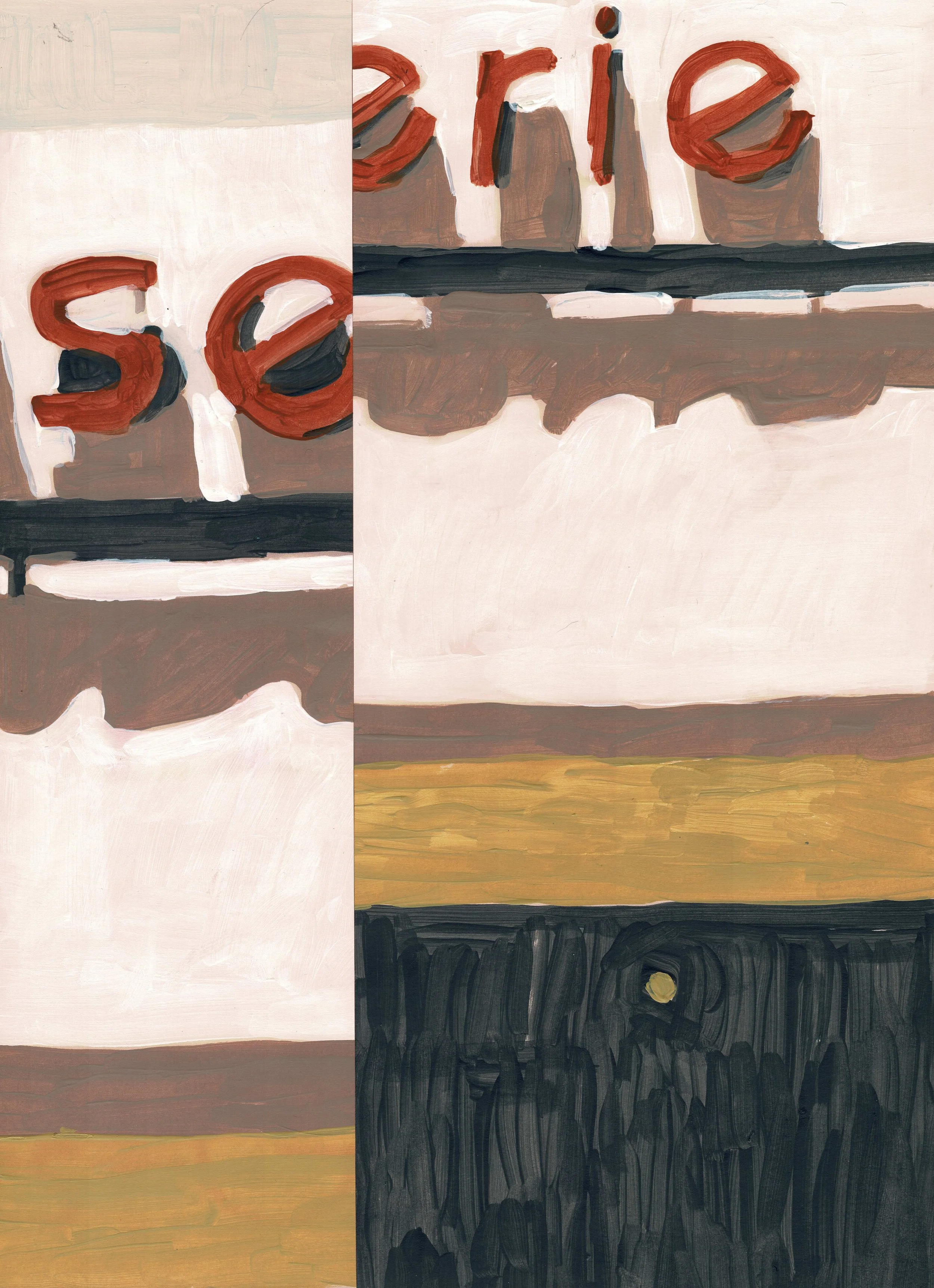

La Brasserie du Commerce I-VIII — 2026
Collage of acrylics on paper
40 x 30 x 2,5 cm
La Brasserie du Commerce works from a single image too. The shadow throws its own lettering across the pediment. Photographed one town over in Saint-Rémy-de-Provence, on the Place de la République, over a late lunch beside a children's carousel playing old French chansons on a loop. This, they decided in that moment, was the real Provence. The photograph recurs across eight works, each a different zoom, then sliced apart and recombined with its other versions until the subject stops being a café front and starts being an alphabet, a series that began as a late lunch and ended, more or less, as a study in typography.
At least two things will never make it onto canvas from that week. The pool stayed exactly as it was found: full, blue, and entirely theoretical, paradise held in reserve rather than used. The palm trees were a different kind of absence: a single row of them, spotted from the car at the trip's lowest point, on a stretch of road that had nothing else in common with Provence's usual cast of cypress, plane trees, and lavender. Palm trees are the tree she looks for on every trip, shorthand for paradise wherever it turns up. This row showed up exactly when paradise was least available, which reads either as terrible timing or as the entire point. It will not be painted.
These are the first images to leave that vacation behind. Provence gave more than terraces and lunches, and the rest of it is still working its way onto paper and canvas. What's here is a beginning, not a summary. Not yet.
View other series → Ausfahrt → Bilbao → Beach Play → Greetings from …